
Investing in Punta Cana in 10 steps: the strategic route to real estate success
Investing in Punta Cana in 10 steps
In the competitive world of international real estate investment, few destinations offer such an attractive equation of returns, stability, and projection as Punta Cana, Dominican Republic. This Caribbean enclave combines sustained tourism growth, solid service infrastructure, and a legal framework favorable to foreign investment.
The trend toward high-end vacation rental consolidates year after year, driven by the arrival of international visitors and the development of cutting-edge urban projects like Larimar City & Resort. In this article we outline the 10-step strategy to set up a profitable vacation-rental investment model without needing local residency. A roadmap based on data, best practices, and operational experience in the Dominican market.
The strategic route to real estate success
1. Define your investor profile and goals
Every investment decision begins with a key question: What do you want to achieve and within what timeframe? For vacation rentals, it's essential to determine whether you're after short-term profitability through high-season occupancy or stable income through long-term contracts.
Factors to analyze:
- Time horizon: short, medium, or long term.
- Intended use: vacation, residential, or mixed.
- Level of involvement: direct, delegated, or hybrid management.
- Target return: set a realistic annual ROI.
A clear definition of these points will guide all subsequent decisions, from location to operating model.
2. Choose location and property type
Location is the central axis of real estate value. Punta Cana offers advantages such as:
- Accessibility: 15 minutes from Punta Cana International Airport and connected to Santo Domingo by highway.
- Consolidated tourism offer: golf, marinas, shopping centers, and top-tier beaches.
- Security and community: gated complexes with 24/7 surveillance and integrated services.
As for property type, the market presents three high-demand profiles: standalone villas with private pool, ideal for groups and families; apartments in tourist complexes near restaurants and nightlife; and townhouses in resorts with golf and club access. For example, townhouses at Larimar City & Resort — a modern haven for golf lovers.
3. Legal analysis and verification
In international markets, legal certainty is critical. In the Dominican Republic, essential steps include:
- Title review at the Real Estate Registry to rule out liens or litigation (Law 108-05).
- Tourist licensing and tax registration with the General Directorate of Internal Taxes (DGII).
- Advice from a local lawyer specialized in real estate and tourism.
It's also advisable to consider the ProDominicana investment guarantee certificate, which reinforces legal protection for foreign capital.
4. Define the operating model: short, long, or mixed term
Profitability depends on both the asset and the management model:
- Short term: 3-7 night stays, higher income per night but more turnover and housekeeping costs.
- Long term: monthly or annual contracts, lower turnover and management, more predictable income.
- Mixed model: vacation rental in high season and long contracts in low season.
The key is to lean on technology (PMS, Channel Manager, Guesty, Lodgify) to optimize bookings and coordinate local cleaning, maintenance, and guest-service teams.
5. Furnish and equip with a turnkey pack
A rental-ready property should be functional, attractive, and differentiated:
- Furniture: durable, washable, suited to intensive use.
- Equipment: essential appliances, full kitchenware, quality linens.
- Aesthetics: minimalist Caribbean style with neutral tones, blue accents, and light wood.
- Added value: welcome pack, beach towels, umbrellas, on-request chef service.
The goal is to minimize the time between purchase and the start of operations.
6. Set pricing and booking policies
A smart pricing strategy maximizes occupancy and margin. Recommended steps:
- Comparative analysis on platforms like Airbnb, Booking, and Vrbo.
- Use of revenue-management tools to adjust prices based on demand, seasonality, and local events.
- Clear, tiered cancellation policies.
- Strategic promotions: pre-opening discounts, special rates for long stays, or low-season "workation" packages.
7. Create and optimize profiles on rental platforms
Your digital presentation is your sales pitch. Investing in professional photography and optimized descriptions is a must:
- Images with natural light and wide framing.
- Clear, descriptive titles to make your property stand out: "Private villa at Larimar City & Resort with pool and exclusive recreational spaces."
- Descriptions with bullet points and SEO keywords for portals: "vacation rental Punta Cana," "private pool villa DR."
- Updated calendar and a proactive system to gather positive reviews.
8. Remote operational management
With the right support, residing in the destination isn't necessary for successful management:
- PMS and mobile apps for bookings and communication.
- Local teams for check-in, cleaning, maintenance, and complimentary breakfasts.
- Digital checklists and photo reports for remote control.
This guarantees a consistent guest experience and efficiency for the investor.
9. Financial control and key metrics
A tourist property is, above all, a business. Tracking should include:
- Essential KPIs: ADR (average daily rate), occupancy rate, RevPAR (revenue per available room), GOP (gross operating profit).
- Separate accounting for income, fixed costs, and variable costs.
- Periodic adjustments based on seasonality and customer feedback.
Rigorous control enables informed decisions and helps spot improvement opportunities.
10. Measure, improve, and scale
When operations reach stability, it's time to think about expansion:
- Improve the current asset's performance through adjustments in price, photos, or services.
- Invest in a second property or manage third-party assets.
- Diversify into other tourist areas of the country: Larimar City & Resort, Bávaro, the Dominican North, among others.
Scalability rests on three pillars: efficient systems, a trusted team, and a solid brand.
From plan to action
Investing in Punta Cana through vacation rentals isn't an improvised bet — it's a high-potential business project when followed through a structured process like this one. The combination of an expanding destination, a foreign-investment-friendly framework, and a more professional tourism sector makes this one of the most attractive strategies in the Caribbean.
If you want to access the full "Land in DR in 10 steps" guide — with checklists, timelines, and recommended-vendor lists — you can download it for free in the 10-STEPS GUIDE. A tool designed to make your investment more profitable, faster, and safer.
By Macarena Perona
Deputy Director
Communications
Featured projects
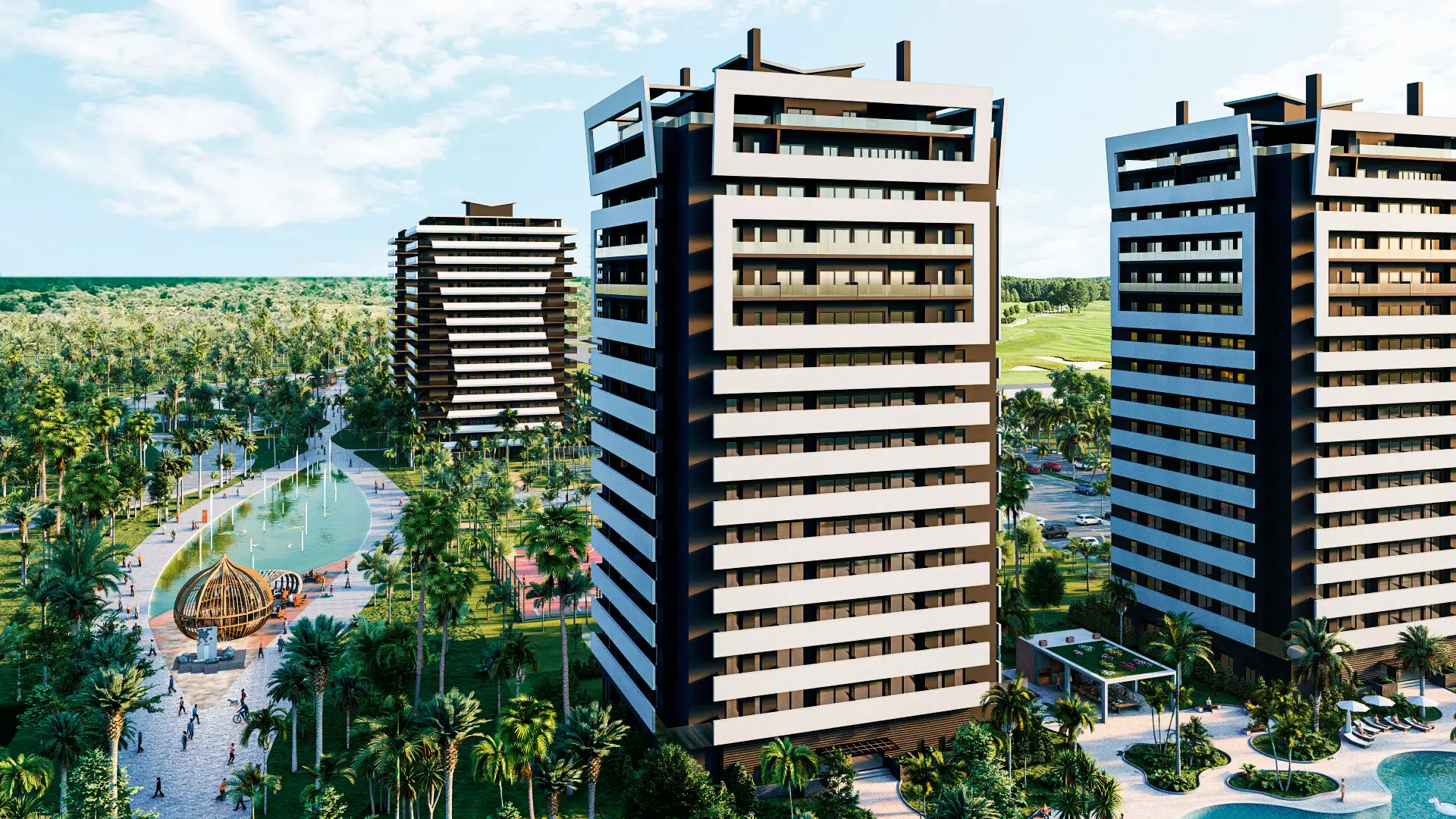
Explore the residential projects of Larimar City mentioned in this article.


Smart Investment
Join the first Smart City in the Caribbean. Discover how Larimar City redefines safety and property value in Punta Cana.
Request information