The importance of the on-site engineer: guarantee of success in international projects
The importance of being on site: how the direct presence of the engineer guarantees success in international projects
As a deployed engineer at CLERHP, I've had the opportunity to work in different Latin American countries: Bolivia, Paraguay, and the Dominican Republic. Each experience has shown me that on-site presence isn't a complement — it's a strategic necessity to ensure quality, meet deadlines, and convey trust to both clients and investors.
Throughout my career I've been able to verify that being on site completely changes the dynamics of a project. It's not just about supervising structures — it's about anticipating problems, making immediate decisions, reinforcing communication with local teams, and strengthening the relationship with those who trust us. In this article I want to share my personal and professional experience, and explain why I believe the figure of the deployed engineer makes the difference in the international construction sector.
My first experience: Bolivia
My first destination as a deployed engineer was Bolivia, with residence in Santa Cruz de la Sierra. Until then, my experience was mainly technical, but it was there that I discovered what it means to live engineering in all its dimension.
From the very first moment I faced the real magnitude of a project: the pouring of concrete, the smell of dampness and steel, the formwork systems shipped from Spain, the cranes dominating the landscape… Everything that on the blueprints seemed abstract, on site came to life. And with that, I also discovered the importance of being physically present.
They weren't easy months. The pressure to rise to the opportunity and the very pace of the work demanded much more than technical knowledge. They required reactivity, constant adaptation, and leadership. The arrival of the COVID-19 pandemic complicated the situation even further: lockdowns, canceled flights, and the distance from my family. But even in the midst of that uncertainty, I confirmed that being on the ground was the key to projects not stopping.
In Bolivia I learned that a problem on site, if tackled in person, is solved in a matter of minutes. What remotely could take days, on the ground is solved immediately. That immediacy makes the difference and avoids costly delays.
Paraguay: consolidation of experience and closeness
In 2020 I had the opportunity to make the leap to Paraguay. The context there was different, but the lesson was the same: closeness with the local team and with clients is irreplaceable.
In this country I began to take on a more active role, combining the technical side with the commercial side. Being there allowed me to verify that, beyond cultural differences, we all shared the same goal: for the project to move forward and meet the most demanding standards.
I was able to work side by side with local colleagues and also with technicians deployed from Spain. That direct contact allowed us to solve complex situations quickly and generate a climate of trust that would be impossible to convey through calls or emails.
From Paraguay I took something fundamental: the certainty that the human relationship is a key pillar in any international project. The deployed engineer doesn't just guarantee that the design is correctly executed — they also become the direct link between client, developer, and work teams.
The Dominican Republic: high-impact projects
After a pause for paternity, in 2023 I rejoined the deployed team — this time in the Dominican Republic. This country represents one of the biggest challenges and, at the same time, one of the greatest satisfactions of my career.
The Dominican Republic is a territory in full development, with great opportunities in the construction sector. However, the work pace is different and adapting to that dynamic required patience and flexibility. What in other contexts is executed at an accelerated pace, here is lived with a more measured focus — which forced me to rethink my way of managing time and priorities.
One of the most outstanding milestones in this country has been participation in Larimar City & Resort, being designed as the Dominican Republic's first smart city. Being on the ground has been essential to strengthen ties with investors and developers, generate trust, and provide immediate responses to the challenges of a project of this magnitude.
In this environment I confirmed that delivering a budget in person, discussing blueprints directly with the client, or walking the site together aren't simple formalities — they're gestures that convey commitment, seriousness, and closeness. That face-to-face interaction builds lasting relationships and differentiates CLERHP from other companies in the sector.
Lessons learned on the ground
Each country has left me lessons that have shaped my way of understanding international engineering. Some of the most relevant are:
Immediate problem resolution
On site, the unexpected is inevitable. What's important is the speed with which it's managed. Direct presence allows reacting in minutes and avoiding greater consequences.
Generation of trust with the client
Clients value closeness. Knowing that behind every blueprint there's an engineer who shows up, explains, and accompanies conveys peace of mind and professionalism.
Effective coordination with local teams
Fluid communication with on-site personnel ensures that international standards are met in every detail. Distance, on the other hand, usually generates misunderstandings and delays.
Cultural adaptation
Each country has its own pace, its regulations, and its way of working. Being there makes it possible to understand and respect those particularities, integrating the best of each context into the project.
Reinforcement of the CLERHP brand
Our direct on-site presence differentiates us. Clients perceive a "plus" in the way we accompany each phase of the project, and that translates into trust and long-term reputation.
The strategic value of the deployed engineer
Looking back, I realize that what truly makes the difference isn't just technical knowledge, but the ability to be present. Engineering is lived on the blueprints, yes, but it's consolidated on the ground.
The figure of the deployed engineer provides:
- Quality guarantee, by supervising each stage in person.
- Agility in decision-making, resolving in real time.
- Closeness with the client, generating relationships based on trust.
- Greater backing for local teams, who feel constant support.
- Communication without time-zone or cultural barriers, which ensures flow at all times.
For all of this, I'm convinced that this model not only must be maintained, but will continue to grow in the coming years.
Challenges and sacrifices
Not everything has been easy. Being far from family, adapting to different work paces, and facing the unexpected far from home are daily challenges. However, each difficulty has become an opportunity for learning.
I've developed skills that, otherwise, would have taken longer to consolidate: flexibility, empathy, resilience, and leadership. And above all, the certainty that human value is as important as technical value in any construction project.
Recommendation to new engineers
If I had to give advice to young engineers considering an international experience, I'd tell them not to doubt it. Stepping out of the comfort zone, living another culture, and facing real challenges transforms you both personally and professionally.
The work site is an incomparable school: it teaches you to make decisions under pressure, to work in a team with people of different origins, and to see the real impact of every blueprint and every calculation. It's an accelerated learning that provides a global vision impossible to acquire from a distance.
Conclusion
After traveling thousands of kilometers, supervising countless blueprints, and delivering budgets in person, I'm convinced that the success of international projects is built on the ground.
Being on site means anticipating, resolving, accompanying, and conveying trust. It means reinforcing the CLERHP brand in every decision and ensuring that our clients and investors perceive the seriousness and commitment that define us.
Engineering is projected from the blueprints, but it's lived on the ground. And that experience is, without a doubt, the key to the success of our international projects.
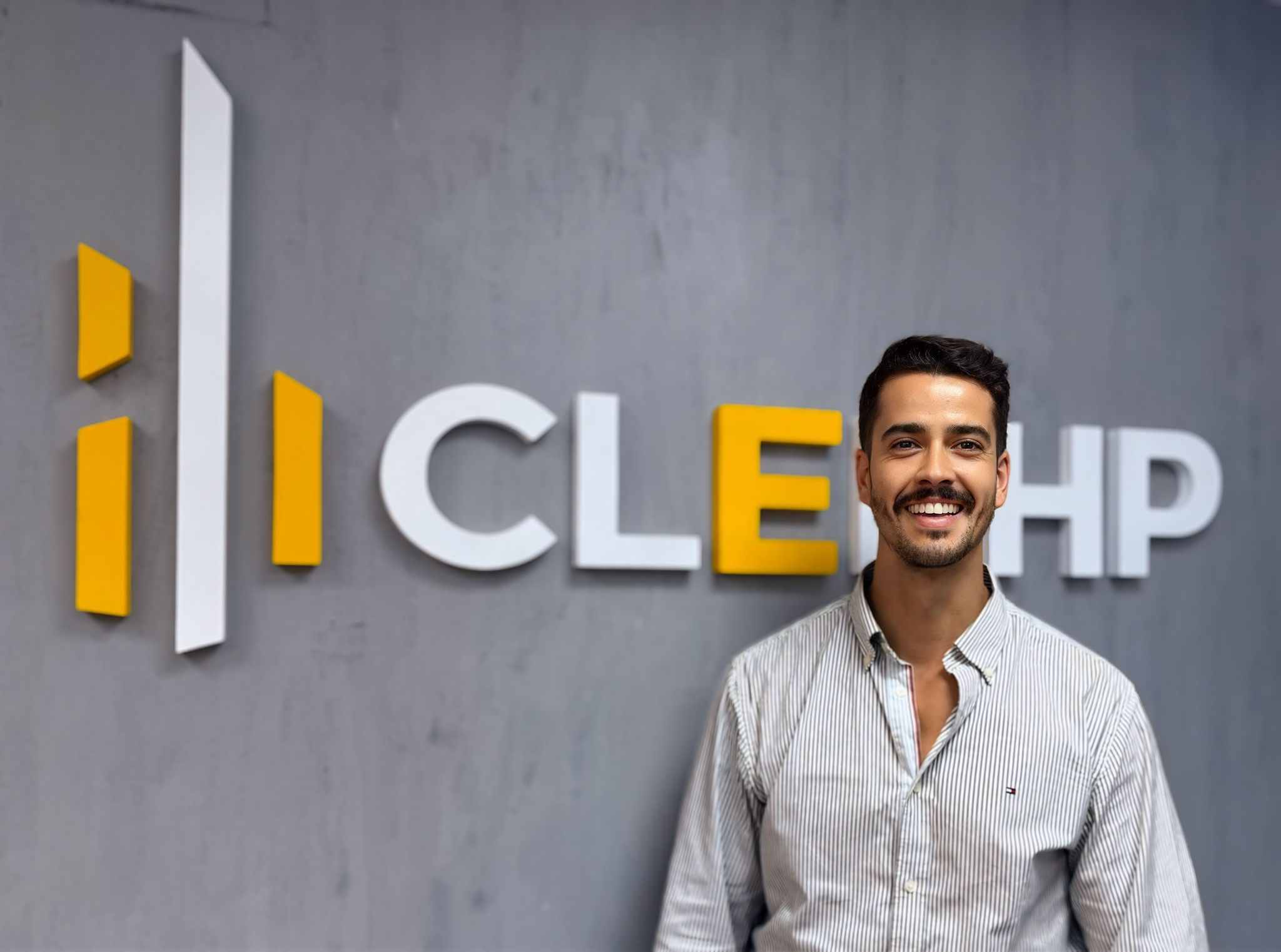
By Álvaro Palazón
Technical Department
Civil Engineer
Featured projects
Explore the residential projects of Larimar City mentioned in this article.



Smart Investment
Join the first Smart City in the Caribbean. Discover how Larimar City redefines safety and property value in Punta Cana.
Request information