
Air connections between Europe and Punta Cana: the bridge driving tourism growth
Air connections between Europe and Punta Cana: the bridge driving tourism growth
In the global tourism industry, air connectivity isn't a logistical detail — it's a decisive factor for a destination's success. The Dominican Republic, and especially Punta Cana, has understood this reality better than many competing markets in the Caribbean and Latin America.
Thanks to a sustained strategy of alliances with international airlines, investment in airport infrastructure, and tourism-friendly policies, Punta Cana has become one of the best-connected Caribbean destinations to Europe. This advantage has had a direct impact not only on tourist arrivals, but also on real estate investment, residential tourism, and the region's economic development.
Punta Cana: the Caribbean's main air hub
Punta Cana International Airport (PUJ) is currently the airport with the highest international traffic in the Dominican Republic and one of the most important in the Caribbean. Its private management model has enabled an agile, efficient expansion aligned with global market demand.
Unlike other airports in the region, PUJ has prioritized the traveler experience, operational capacity, and direct connectivity with the main tourist-source markets.
Europe and Punta Cana: direct connections year-round
Over the past decade, air connections between Europe and Punta Cana have grown steadily. Key European cities now have direct, frequent flights:
- Madrid: the main gateway from Europe, with multiple weekly frequencies.
- Paris: a strategic connection with the French and broader European market.
- Frankfurt and Berlin: direct access to the strong German market.
- Amsterdam, Zurich, and Milan: connections that attract high-spending tourism.
Airlines like Iberia, Air Europa, Air France, Condor, TUI, and Edelweiss have increased routes and frequencies, consolidating Punta Cana as an accessible destination year-round — not just in high season.
A shift in the European traveler profile
Direct connectivity has transformed the European visitor profile. It's no longer just the tourist who travels once a year for two weeks, but a more diverse audience:
- Second-home owners.
- Investors supervising real estate projects.
- Professionals combining remote work with extended stays.
- Families who travel several times a year.
This new profile positively impacts the local economy, generating more consistent and diversified spending.
Direct impact on the real estate market
Ease of access from Europe has been one of the main catalysts for real estate market growth in Punta Cana and its surroundings. When a destination is just one direct flight from the main European capitals, the decision to invest becomes much simpler.
European buyers especially value:
- The possibility of traveling without stops.
- The country's stability.
- The use of the dollar in real estate transactions.
- Profitability through tourism rental.
This has driven the development of residential, tourism, and mixed-use projects oriented toward the international market.
Punta Cana International Airport: a modern, high-end experience
Airport infrastructure plays a fundamental role in the destination's perception. PUJ has constantly invested in modernizing its terminals, standing out for:
- Expansion of Terminal B for long-haul flights.
- Capacity to receive large aircraft like the Airbus A350 and Boeing 787.
- VIP Lounge services with exclusive areas, premium gastronomy, and a pool overlooking the runway.
- Faster, more efficient immigration processes.
This positive experience from first contact reinforces Punta Cana's image as a modern, high-end destination.
Lower costs and increased tourism volume
The arrival of larger aircraft and increased competition between airlines has enabled a progressive reduction in air ticket costs. This translates into:
- Greater visitor volume.
- More frequent stays.
- An increase in medium-stay tourism.
The result is a more stable tourism flow throughout the year, reducing seasonality and strengthening the local economy.
Punta Cana as a destination for residential tourism
Air connectivity has been key to the rise of residential tourism. Many Europeans no longer see Punta Cana solely as a vacation destination, but as a place to live part of the year.
This phenomenon drives:
- Demand for luxury apartments and villas.
- Long-stay services.
- Planned communities with international standards.
Competitive advantage over other Caribbean destinations
While other Caribbean destinations depend on indirect or limited connections, Punta Cana offers direct, frequent, and reliable flights from Europe. This competitive advantage reinforces its regional leadership and explains its sustained growth.
In short, the solid air connection between Europe and Punta Cana is one of the fundamental pillars of the region's tourism and economic success. Beyond vacation tourism, this connectivity drives investment, real estate development, and Punta Cana's transformation into a global destination.
With modern airport infrastructure and a constantly expanding flight network, Punta Cana doesn't just connect continents — it connects opportunities, quality of life, and sustainable growth.
Deborah Hernández Soto
Communications Department
Featured projects
Explore the residential projects of Larimar City mentioned in this article.
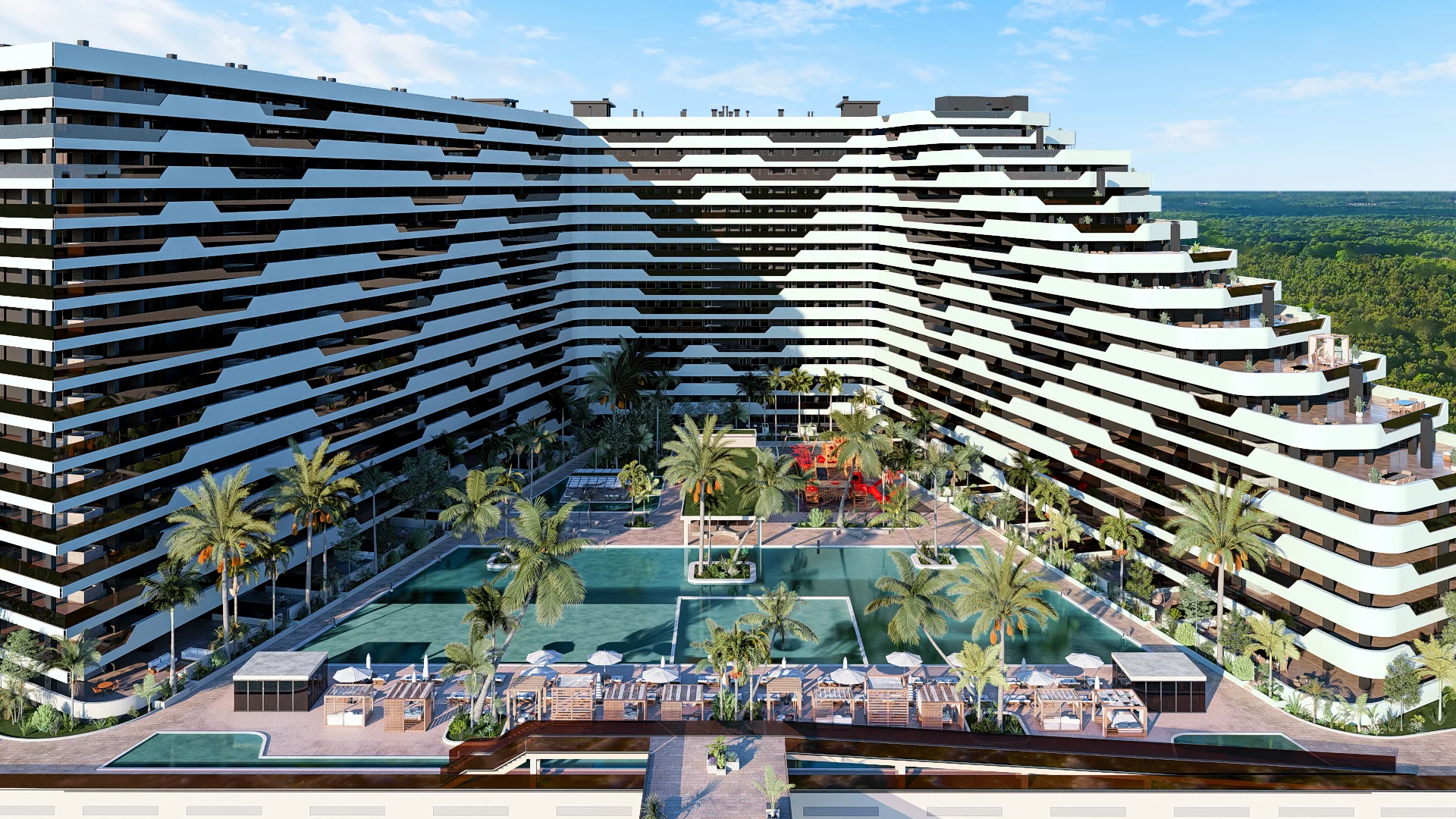


Smart Investment
Join the first Smart City in the Caribbean. Discover how Larimar City redefines safety and property value in Punta Cana.
Request information