What to See Before the Year Ends? 20 Destinations to Discover the Dominican Republic
 Victoria Méndez · Communications Department
There are countries you get to know by visiting one destination. And there are others you only begin to understand when you decide to travel across them.
The Dominican Republic belongs to that second category.
Punta Cana may be your first encounter with the country, but you only need to hit the road to discover that the Dominican Caribbean changes personality every few kilometres. There are colonial cities, fishing villages, mountains, surfing beaches, seaside communities and destinations that are beginning to write a new chapter in their tourism development.
For the traveller, this diversity means having many ways to build a trip.
For those considering living or investing in the Dominican Republic, it means something more: understanding the territory that exists around their investment.
And that map is becoming more and more interesting.
The Dominican Republic's Ministry of Tourism currently maintains specific information on destinations such as La Altagracia, La Romana, Puerto Plata, Samaná, Santiago and Greater Santo Domingo, while its hotel indicators show activity in areas ranging from Bávaro - Punta Cana to Bayahíbe, Miches, Sosúa - Cabarete, Jarabacoa - Constanza and Juan Dolio - Boca Chica.
These are 20 stops that help explain why the Dominican Republic offers much more than a single way of living the Caribbean.
1. Punta Cana: the starting point
There is a reason why Punta Cana has become one of the great gateways to the Dominican Republic.
Beaches, hotels, gastronomy, golf and entertainment built its international reputation. But around that tourism industry something different has been emerging: a region where you can also live, work, start a business and invest.
The data helps put it into perspective.
In a March 2026 report, MITUR (Ministry of Tourism) recorded an open hotel occupancy of 86.8% in Bávaro - Punta Cana. That same day, Punta Cana International Airport handled 111 commercial flights, 16,696 incoming passengers and 46 routes.
Punta Cana no longer works only as a destination.
It also works as a hub for discovering the east of the country.
2. Bávaro: the most active Caribbean
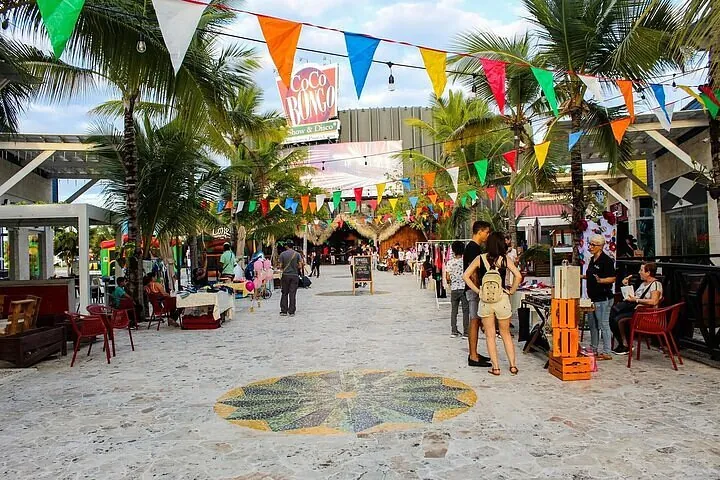
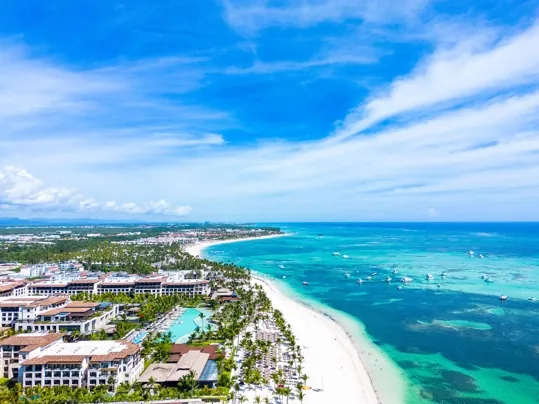
Bávaro represents a particularly dynamic side of Punta Cana.
Here, beaches, restaurants, shops, hotels, nightlife and services coexist, having grown together with the tourist and residential population.
For visitors, it is one of the areas where it is easy to go from the sea to dinner or an afternoon of shopping.
For those who live in the region, it is part of a network of services that makes Punta Cana increasingly work as a city and not exclusively as a holiday enclave.
3. Cap Cana and Juanillo: another way of living by the sea
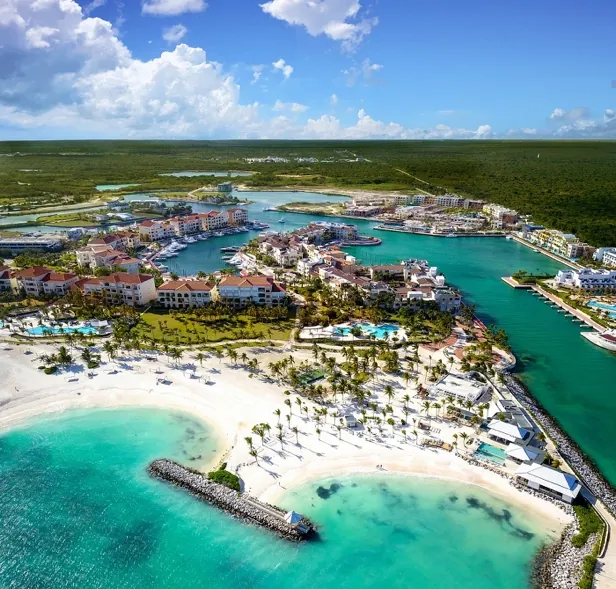
To the south appears a different version of the destination.
Cap Cana combines residential developments, a marina, golf, gastronomy and spaces linked to a high-end lifestyle.
Playa Juanillo completes that experience with one of the most recognisable coastal settings in the area: light sand, palm trees and Caribbean waters.
It is an example of how a single territory can develop different offerings without losing its relationship with the sea.
4. Macao: a landscape that invites movement
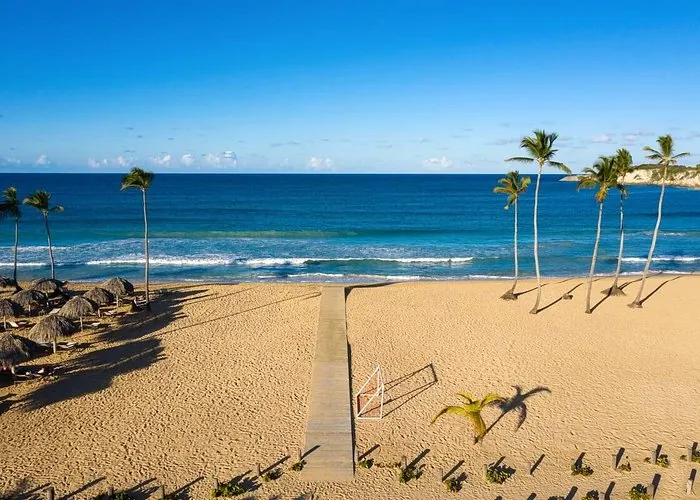
Macao changes the rhythm once again.
Here the star is the ocean.
The breadth of the beach and its natural conditions have made it a reference for surfing and for those seeking a more active experience closer to the landscape.
It is also a good demonstration of the diversity that exists within the Punta Cana area itself: in a relatively short distance you can go from planned communities and resorts to a beach where nature still shapes much of the experience.
5. Higüey: identity and history; Dominican life
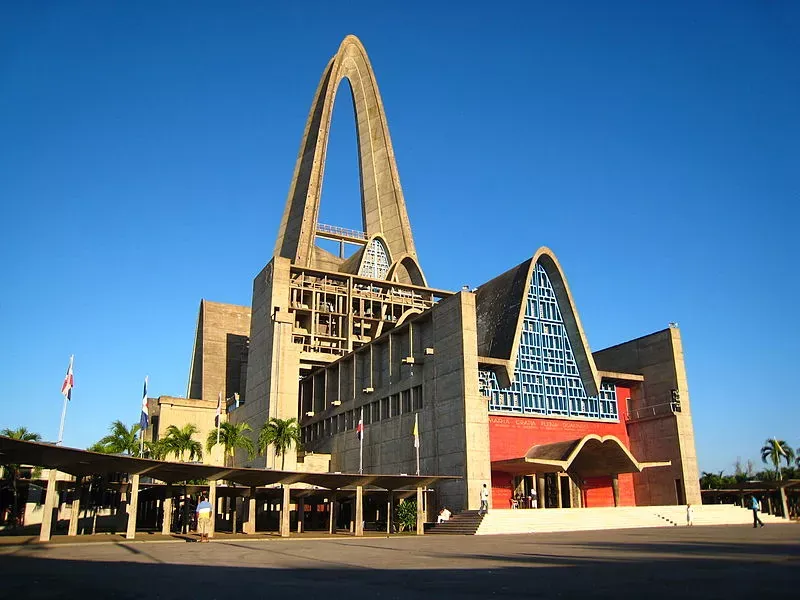
Not everything around Punta Cana looks toward the sea.
Higüey brings you closer to another dimension of La Altagracia province.
The Basilica of Nuestra Señora de la Altagracia is one of its great landmarks, but exploring the city also reveals markets, gastronomy and a dynamic much more linked to everyday Dominican life.
From Larimar City, Higüey can be reached in roughly 30 to 40 minutes by road.
And that makes something interesting possible: combining, within a single region, the international experience of Punta Cana with a close connection to local culture.
6. Bayahíbe: a village that looks out over the Caribbean
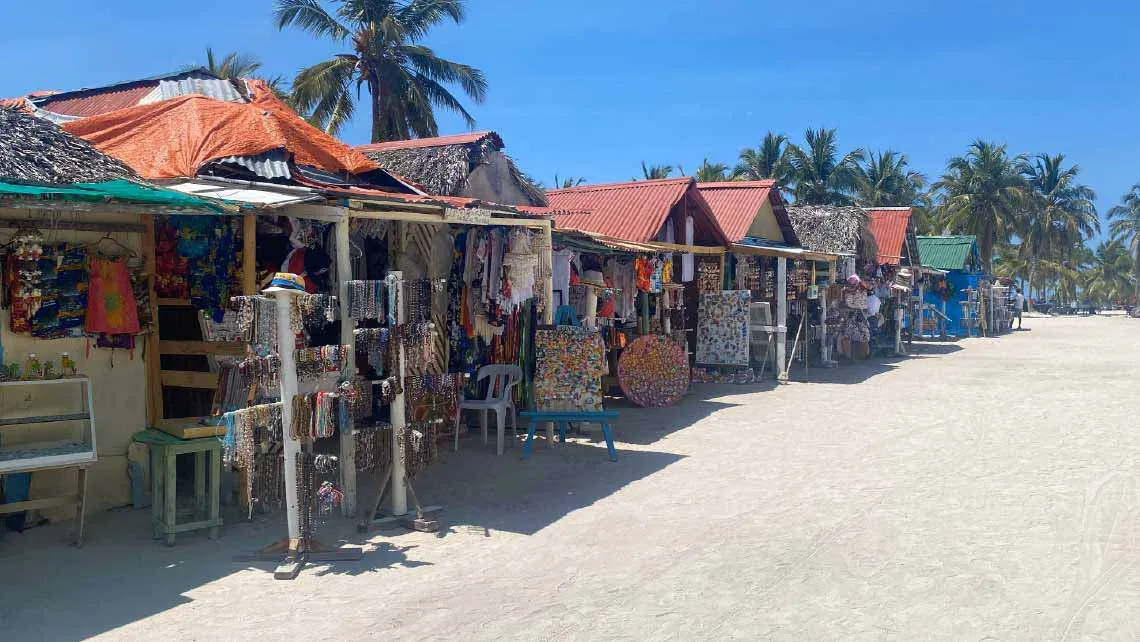
Moving west leads to one of the destinations with the strongest personality in the Dominican east.
Bayahíbe preserves part of its essence as a fishing village while working as a gateway to some of the country's best-known sea experiences.
Numerous excursions depart from here toward Saona Island and Cotubanamá National Park.
Its scale invites you to walk, eat by the sea and devote the day to discovering the Caribbean from the water, leading on to the next destinations:
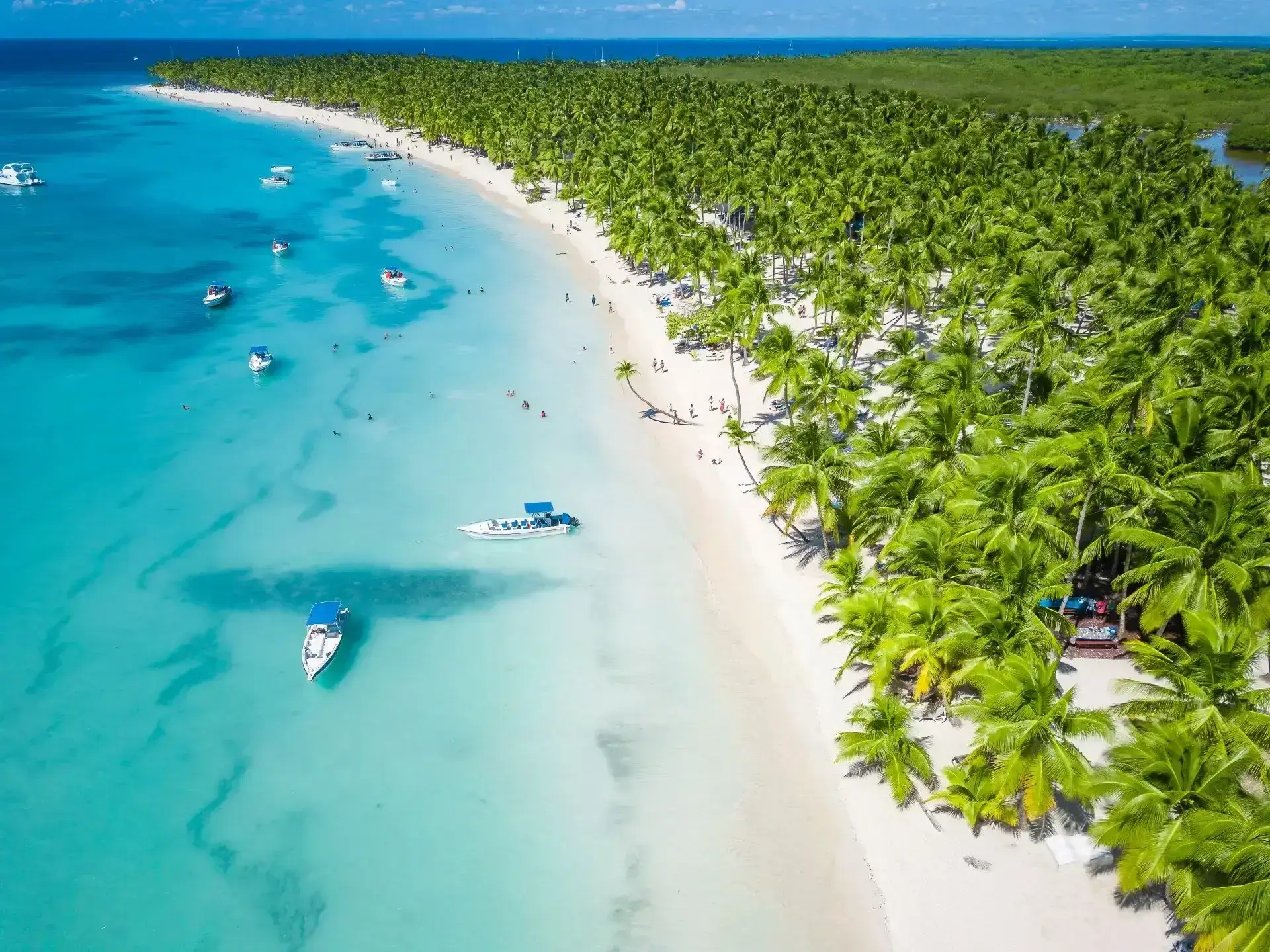
7. Saona Island: the Caribbean we imagine
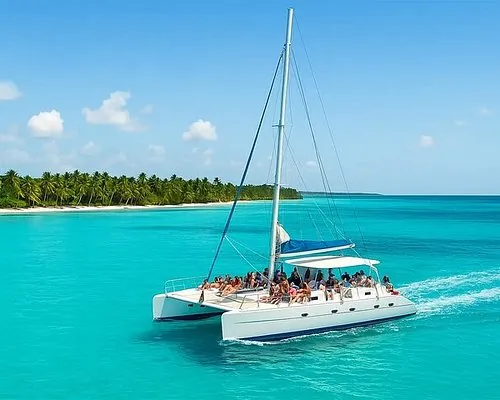
There are places that seem to match exactly the image you had before arriving.
Saona is one of them.
Its waters, beaches and landscapes are among the most widely shared images of the Dominican Republic.
8. La Romana: tourism, culture and development
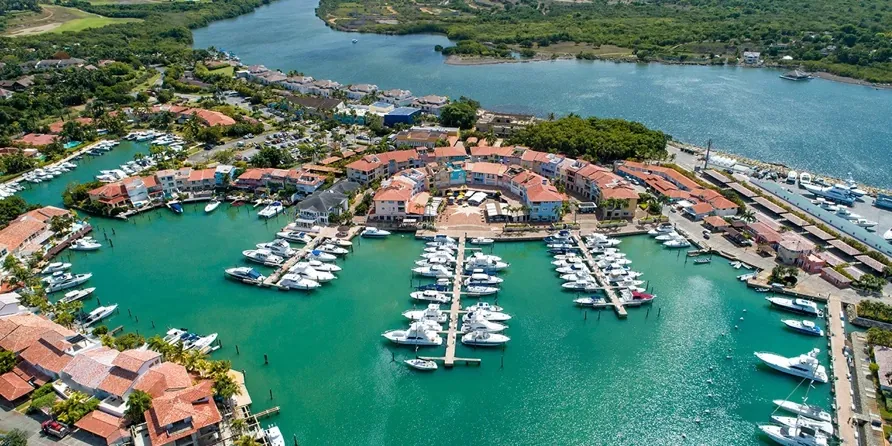
La Romana combines city, tourism activity, residential developments and a strategic location within the eastern corridor.
From Punta Cana, the Coral Highway makes the connection with this area easy; the official Dominican tourism site notes that this road links Punta Cana with La Romana and forms part of the corridor that continues toward Santo Domingo.
It is precisely this infrastructure that has made the different destinations of the east work less and less as isolated points.
Today they can be part of a single route.
9. Altos de Chavón: culture and art above the river
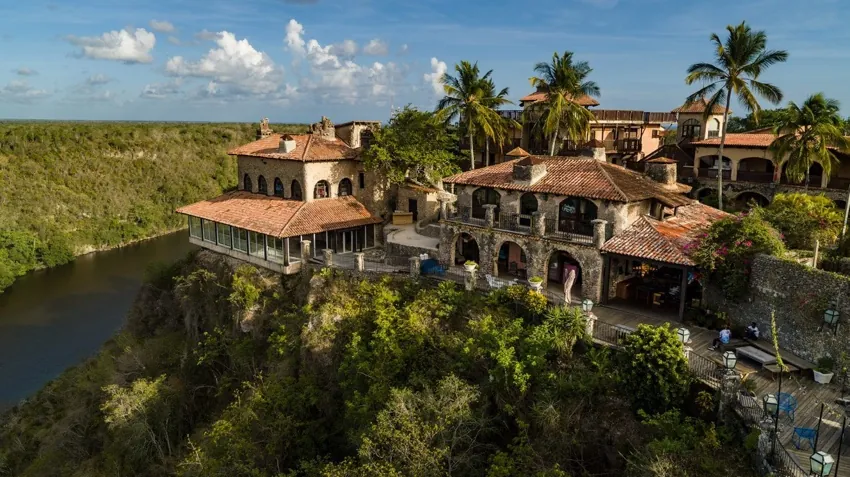
Within the La Romana area, Altos de Chavón offers a completely different experience.
Architecture, art, restaurants and views over the Chavón river build an atmosphere that breaks away for a few hours from the traditional beach image.
It is one of those places that prove that travelling around the Dominican Republic can also mean seeking culture, gastronomy and fashion design in the way European cities frame them.
10. Santo Domingo: where part of the history of the Americas began
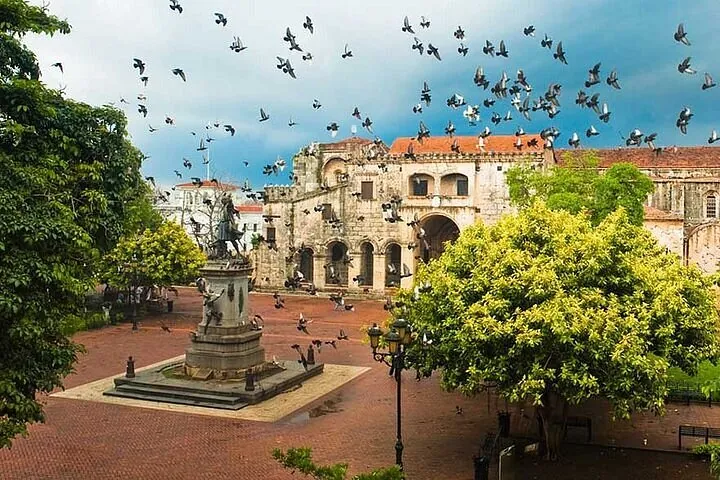
The capital lets you walk among historic buildings, squares and streets of the Colonial City and, a few hours later, find yourself in a contemporary city full of restaurants, commerce, art and nightlife.
From Punta Cana, the Coral Highway makes the road trip possible in under three hours, according to the country's official tourism information.
That makes the capital a perfectly feasible getaway from the east.
11. Boca Chica: a pause before the capital
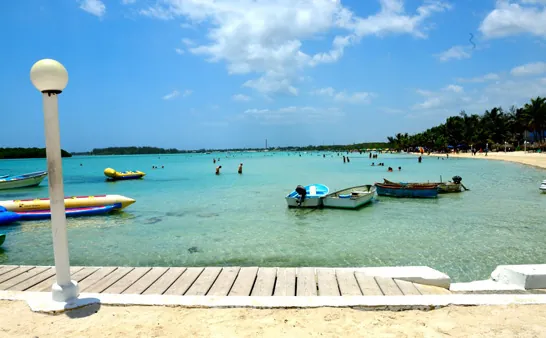
Very close to Santo Domingo appears Boca Chica.
Its location makes it a natural stop within the corridor connecting the capital with the east.
It is an option for those who want to combine a visit to Santo Domingo with a few hours by the sea and get to know a more popular, everyday expression of the Dominican coast.
12. Juan Dolio: close to the city but with a different rhythm
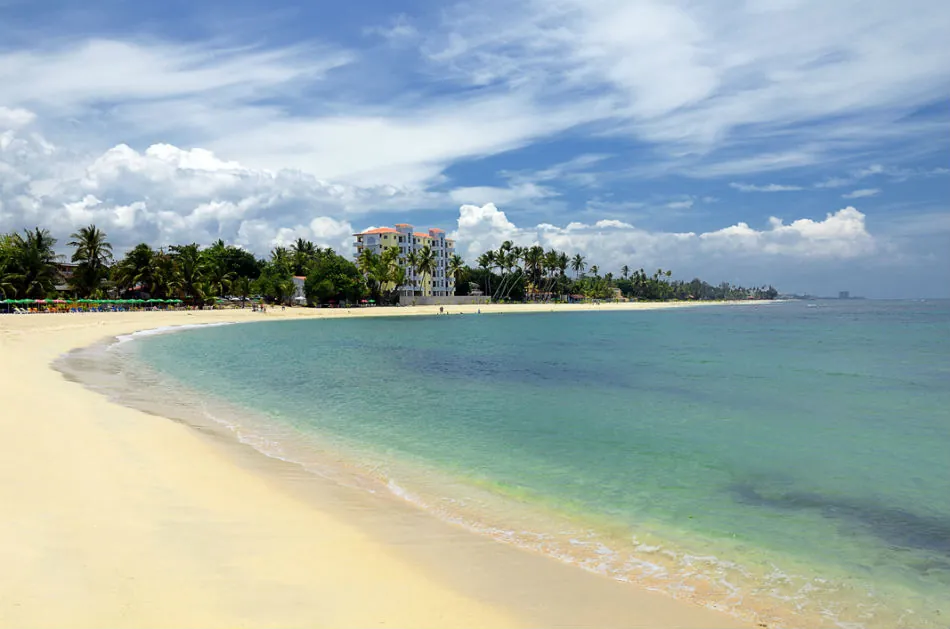
Continuing along the coast we find Juan Dolio.
Its residential development, restaurants and proximity to Santo Domingo have allowed it to build an identity of its own.
It is especially interesting because it shows another model of Dominican destination: one where tourism, second homes and everyday life coexist on a different scale from Punta Cana.
13. Miches: unspoilt ecosystems
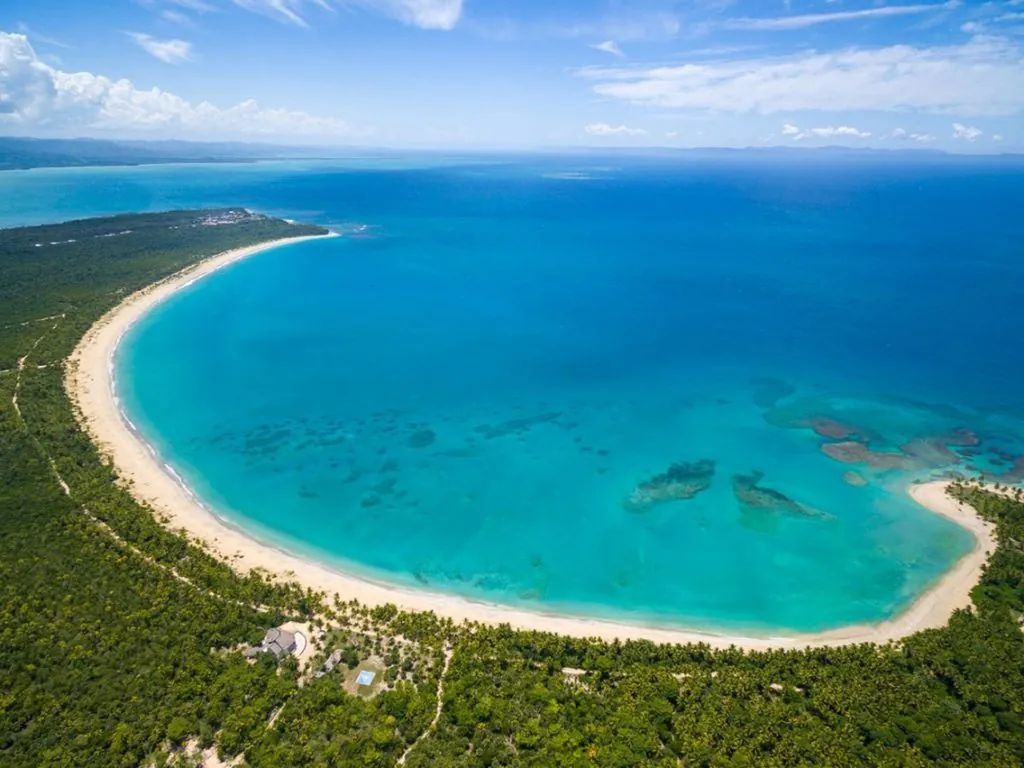
North of Punta Cana, Miches represents one of the areas that has attracted the most interest in recent years.
Mountains, coastline and new tourism developments coexist in a territory where nature continues to play an enormous role.
MITUR's indicators already include Miches as a distinct tourist zone, a sign of the destination's growing relevance within the national tourism map.
For anyone wanting to see where Dominican tourism may keep expanding, it is worth following closely.
14. Samaná: pure nature
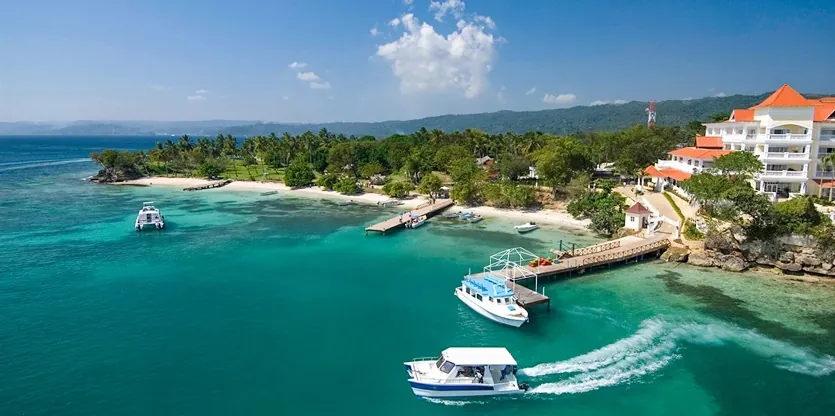
Arriving in Samaná means discovering another Caribbean.
The peninsula combines mountains, vegetation, small communities and some of the most recognisable coastlines in the country.
It is a destination that invites you to stay several days and explore it slowly.
The experience here has less to do with completing a list of places and more with enjoying the journey.
15. Las Terrenas: an international community by the sea
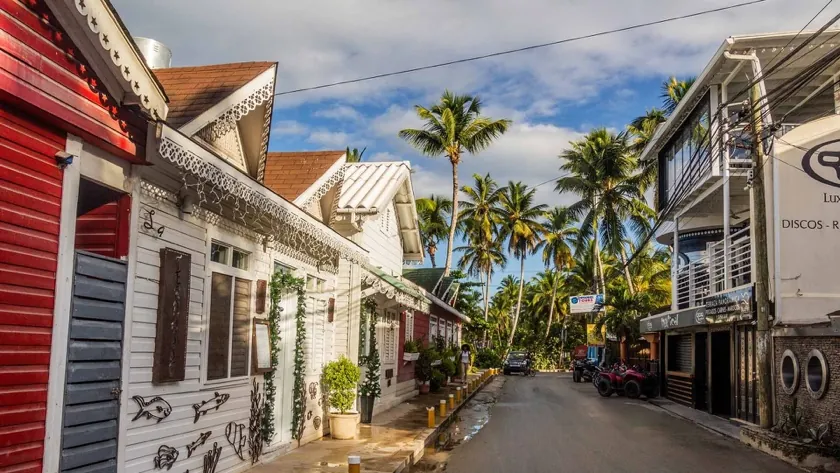
Las Terrenas has a personality that is hard to mistake.
The coexistence of the Dominican community and international residents has created a particular offering of restaurants, small hotels, shops and residential spaces.
The result is a cosmopolitan destination that never completely loses its coastal-village scale.
16. Puerto Plata: history, coast and city
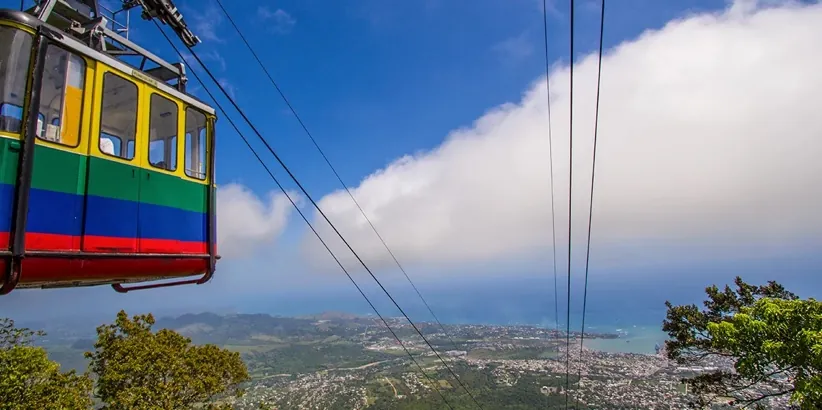
In the north, Puerto Plata offers another combination.
Historic architecture, beaches, mountains and urban activity coexist within one of the traditional tourist regions of the Dominican Republic.
Its position on the national tourism map remains relevant, and Gregorio Luperón International Airport maintains connections serving this entire area.
17. Sosúa: a small bay with a history of its own
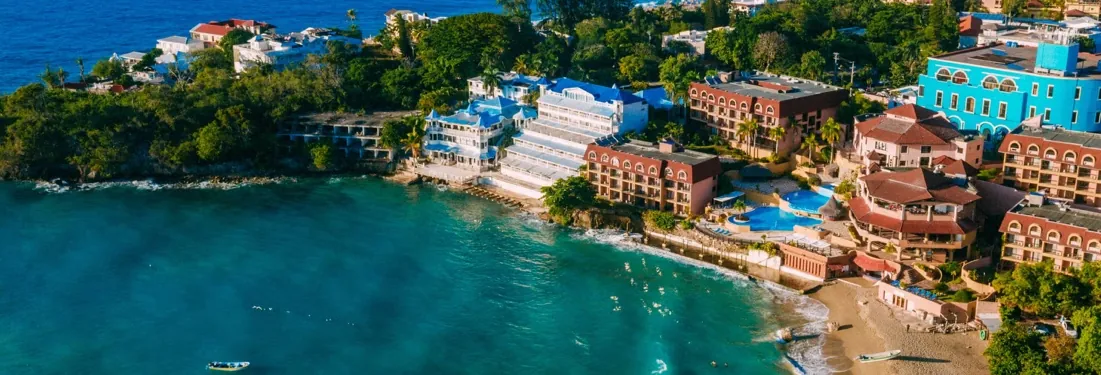
A short distance from Puerto Plata, Sosúa combines a well-known bay with a diverse community and a long tourism track record.
It can easily form part of a route along the north coast and serves as a transition toward another of the country's great destinations:
18. Cabarete: the Caribbean in motion
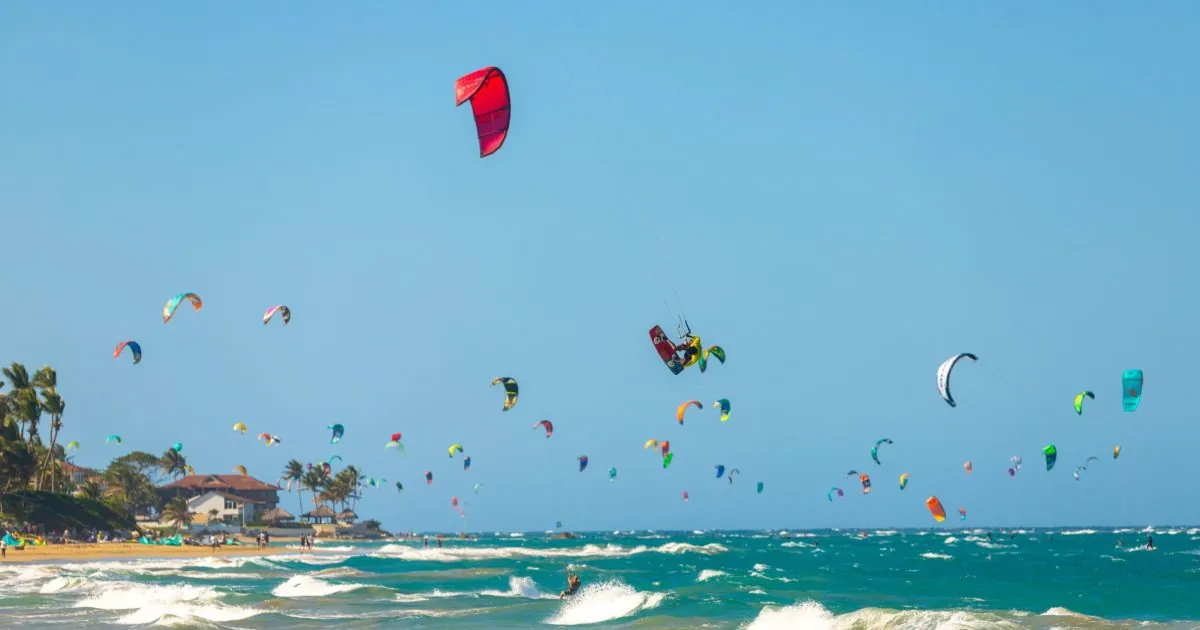
If some places invite you to stop, Cabarete invites exactly the opposite.
Wind, sea and sport are part of its identity.
Kitesurfing, windsurfing and an international community linked to active living have built a very distinct personality around Cabarete.
19. Santiago de los Caballeros: another Dominican Republic
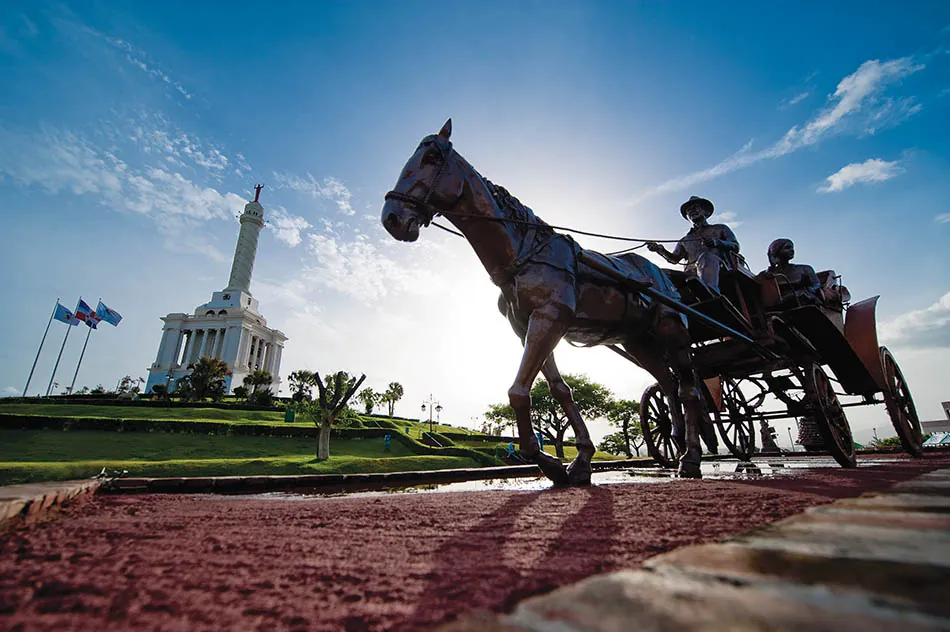
Travelling to Santiago means deliberately moving away from the traditional image of the Caribbean.
The country's second-largest city offers gastronomy, culture, business activity and a privileged position for discovering the Cibao.
The Duarte Highway connects Santo Domingo with Santiago and also serves as a corridor toward mountain destinations such as Jarabacoa and La Vega.
Getting to know Santiago helps you understand that the Dominican Republic does not live only looking toward its coasts.
20. Jarabacoa and Constanza: the Caribbean highlands
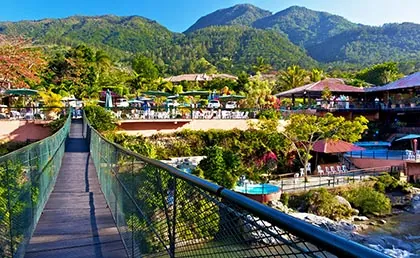
And perhaps this is one of the biggest surprises for first-time visitors.
The Dominican Republic can also mean cooler temperatures, mountains, rivers, agriculture and landscapes completely different from the coast.
Jarabacoa and Constanza offer precisely that contrast.
After days of sand and sea, discovering the mountainous interior lets you end the journey understanding something fundamental: the Dominican Republic is far more diverse than its international image usually shows.
Larimar City: a starting point for discovering the Dominican Republic
This is where location begins to take on another meaning.
Living in Punta Cana does not mean staying within Punta Cana.
It also means being at one of the main entry points to the country and within a land corridor that connects with a good part of the destinations of the east.
From the surroundings of Larimar City & Resort, a getaway can lead toward Higüey and the cultural identity of La Altagracia; toward Macao and the north coast of Punta Cana; toward Bayahíbe and Saona; or continue along the Coral Highway toward La Romana and Santo Domingo.
Road infrastructure has shortened perceived distances. Official tourism information highlights precisely that the Coral Highway connects Punta Cana with La Romana and links the corridor toward Santo Domingo in under three hours.
And to that land connectivity we add air connectivity.
Punta Cana works as one of the great international gateways of the Dominican Republic.
In the official report of 24 March 2026, its airport recorded 46 commercial routes, more than any other airport in the country that day.
That allows us to look at Larimar's location on two scales.
One connects with the world.
The other invites you to discover the country.
For the traveller it is freedom. For the investor, context.
Something changes when we stop looking at a property only through its square metres.
We begin to observe what happens around it.
How you get there.
What services exist.
What places you can visit.
How the territory is growing.
What experiences it offers.
And how easy it is to stay connected with other cities and countries.
Travelling around the Dominican Republic can also be a different way of understanding an investment in Punta Cana.
Tourism has been one of the country's great engines of transformation, and MITUR's data currently makes it possible to follow the evolution of hotel activity, air arrivals, airspace and different tourist destinations.
But behind the numbers there is something simpler.
There is a territory that is better and better connected.
Punta Cana can be the gateway. Santo Domingo can provide history and urban life. La Romana and Bayahíbe can become a getaway. Miches can show where the east is growing. Samaná can offer nature. Santiago, another dimension of the country. And Jarabacoa and Constanza can remind us that even on a Caribbean island the landscape can change completely.
We hope that for visitors it means having twenty reasons to keep exploring.
And for those who decide to establish a second home here or make an investment, something even more interesting: not just choosing a place to arrive at, but a point from which to start discovering an entire country, its beauty and its culture.
Written by
Victoria Méndez
Communications Department
Featured projects
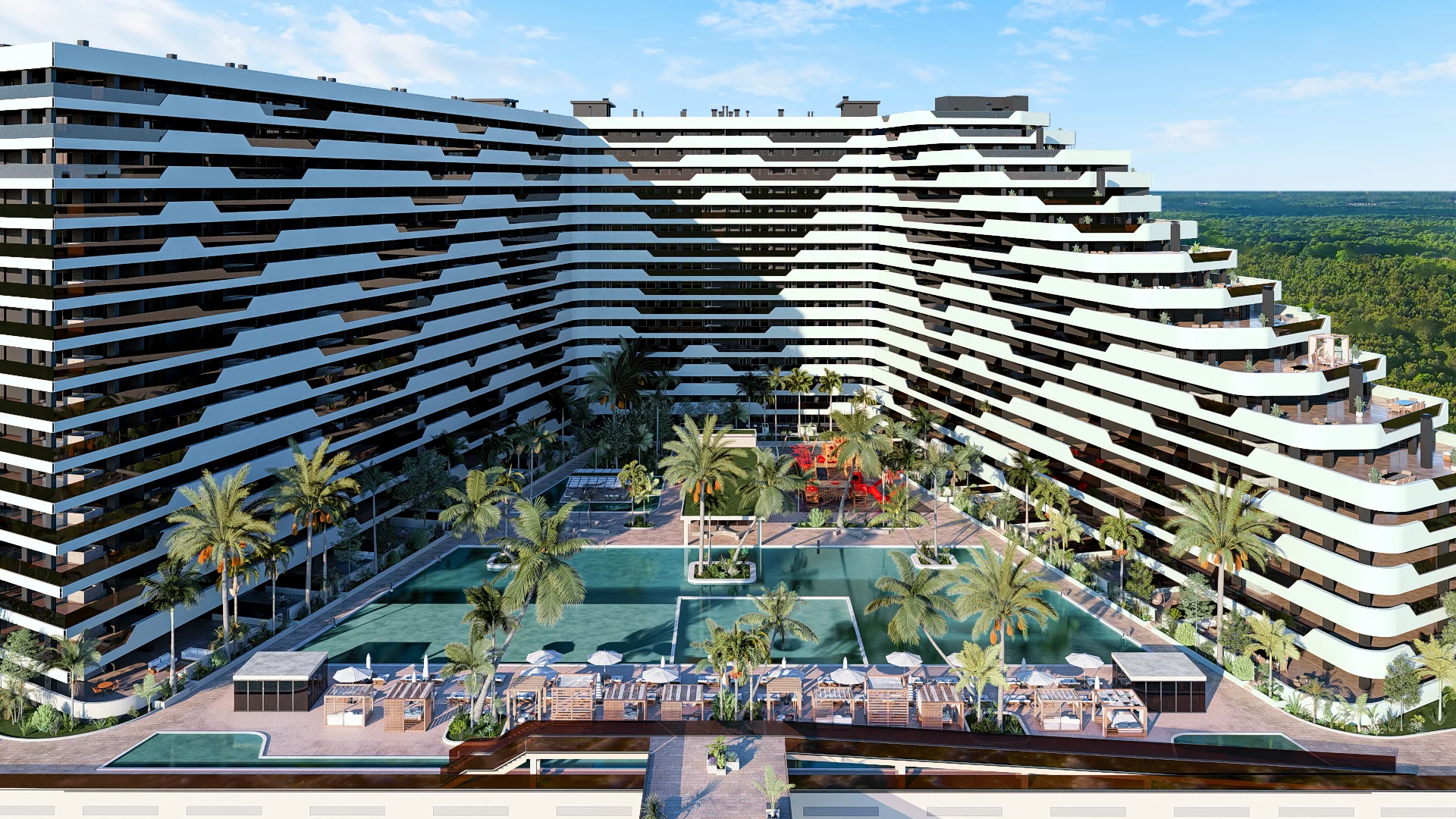
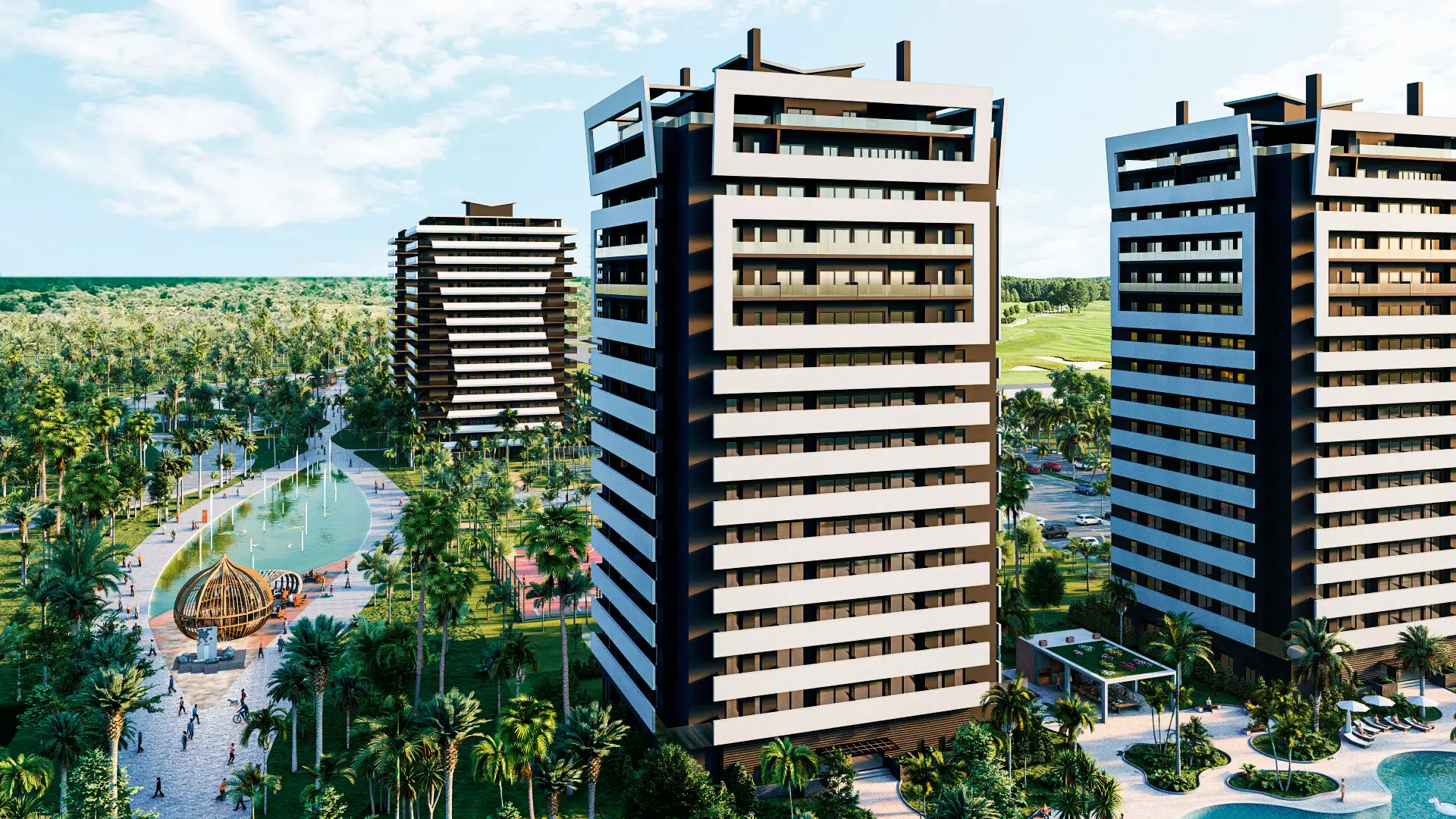
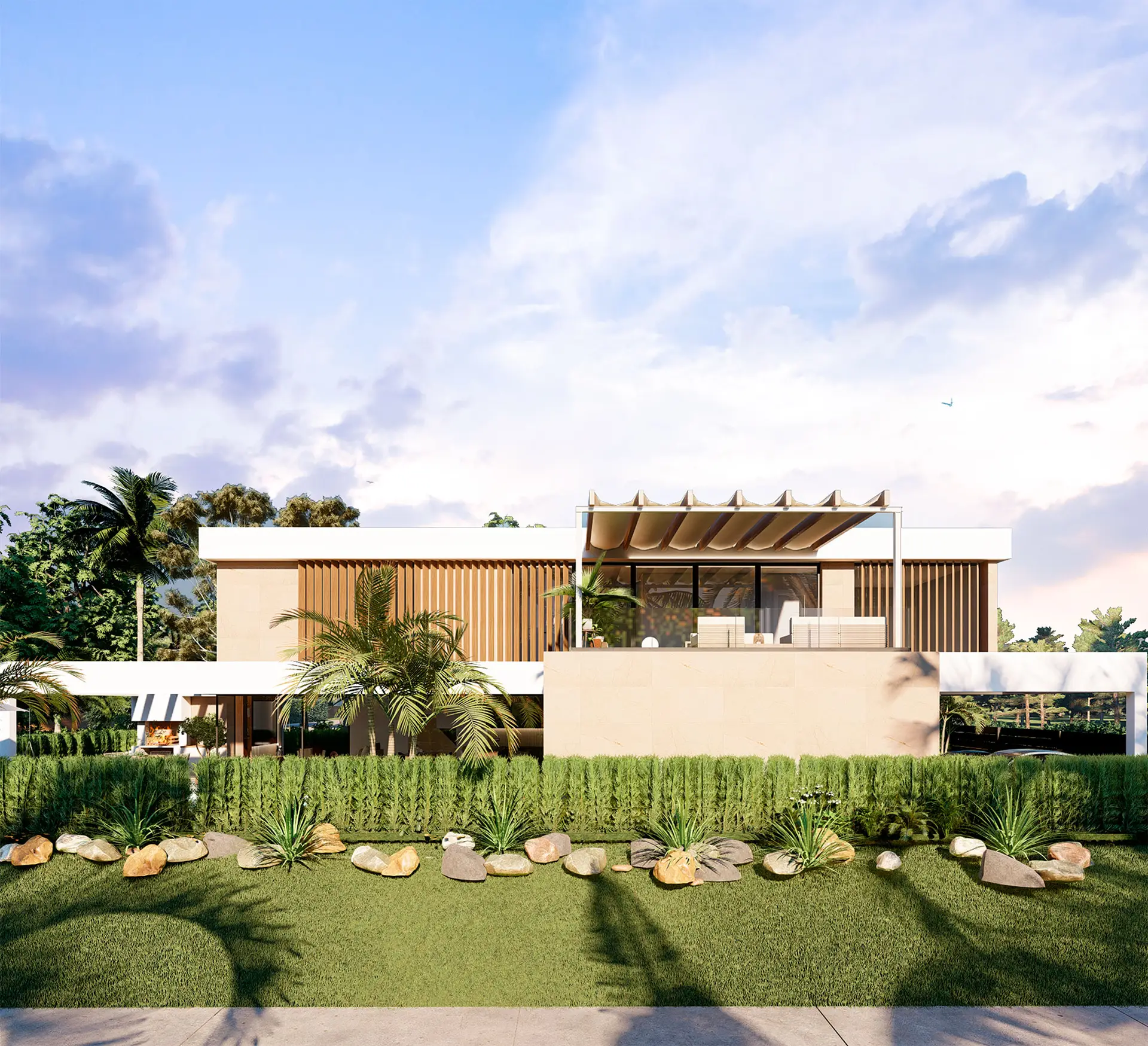
Explore the residential projects of Larimar City mentioned in this article.
Smart Investment
Join the first Smart City in the Caribbean. Discover how Larimar City redefines safety and property value in Punta Cana.
Request information