Bahía de las Águilas: What to See, How to Get There and the Best Time to Visit
Bahía de las Águilas is one of the most spectacular natural landscapes in the Dominican Republic and one of the essential destinations for anyone wanting to discover a different side of the country. Located in the Dominican southwest, it stands out for its crystal-clear waters, white sand, practically untouched setting and great natural wealth.
Unlike other more touristically developed areas, Bahía de las Águilas remains very lightly built up. That makes it an especially interesting destination for those seeking quiet beaches, protected nature and an experience away from large hotel complexes.
Visiting this area helps you better understand the diversity of the Dominican Republic. The country offers not only large established tourist areas, but also spaces of enormous scenic and ecological value.
For travellers thinking about spending longer periods in the country, even as residents or owners, this contrast between nature, tourism and new residential areas can be especially interesting. Projects such as Larimar City represent another model of experience in the Dominican Republic, aimed at combining housing, leisure, services and quality of life.
Where Bahía de las Águilas is located
Bahía de las Águilas is in the province of Pedernales, at the far southwest of the Dominican Republic, very close to the border with Haiti.
Its location is one of the factors that explain its extraordinary state of conservation. It is an area less developed for tourism than other Dominican destinations and surrounded by protected natural spaces.
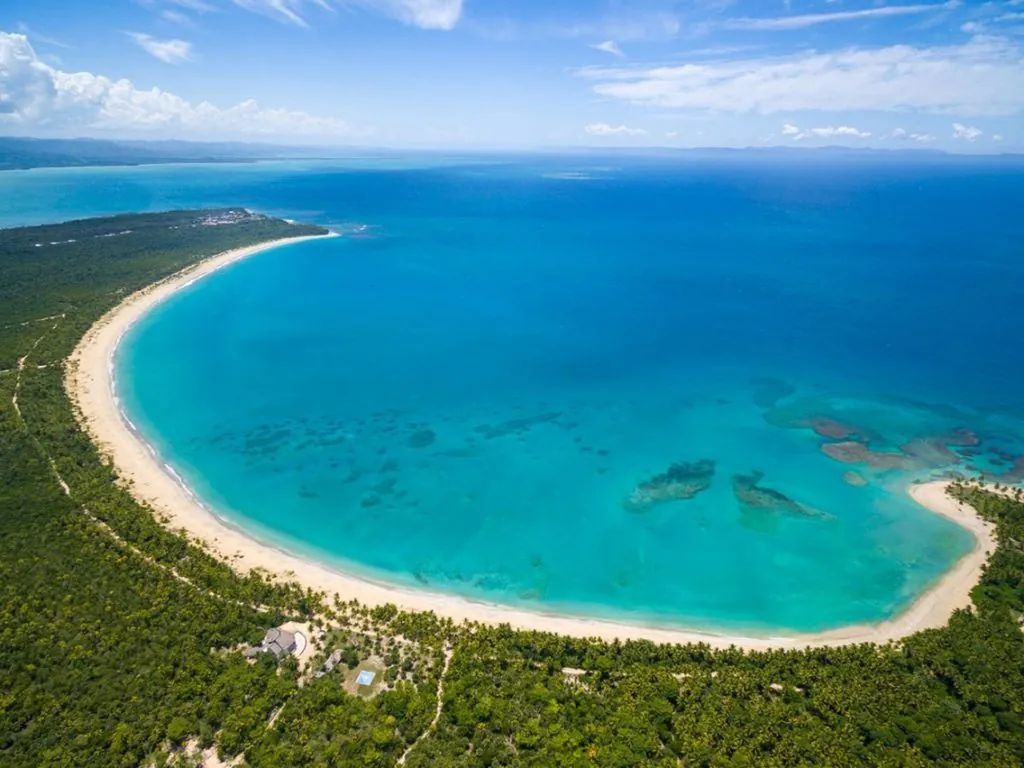
Bahía de las Águilas forms part of Jaragua National Park, one of the country's great natural areas. The landscape combines beach, dry forest, rocky areas and marine ecosystems, creating an environment very different from the more urbanised tourist zones.
Pedernales province and the boundaries of Jaragua National Park
The province of Pedernales is characterised by its enormous natural wealth. Its low population density and the presence of large protected areas have helped keep landscapes practically intact.
Within Jaragua National Park there are different ecosystems and places of natural interest. Bahía de las Águilas is probably one of the best known, but it is part of a much wider territory that includes lagoons, dry forest areas, coastal zones and habitats for numerous animal species.
For visitors, this means that a trip to Bahía de las Águilas can become an opportunity to discover an entire region, not simply a beach.
The area is especially attractive for those seeking ecotourism, photography, nature watching and less crowded experiences.
How to get there from Pedernales or Jimaní
Reaching Bahía de las Águilas requires a little more planning than visiting a beach inside a large tourist area.
The usual route involves travelling first to the province of Pedernales and then continuing toward the Cabo Rojo area, from where you access the Bahía de las Águilas surroundings.
From Pedernales, visitors can arrange the final stretch with suitable land transport or by boat excursion.
Those arriving from Jimaní will have a longer road journey before reaching Pedernales, so it is advisable to plan travel times carefully.
For international travellers, one of the most interesting options is to include Bahía de las Águilas within a multi-day route through the Dominican southwest.
That way you can enjoy the destination more calmly and combine different natural spaces without turning the journey into an overly intense excursion.
What to see and do at Bahía de las Águilas
The main attraction of Bahía de las Águilas is precisely its nature.
Those who come here are not looking for large hotels, shopping centres or an extensive entertainment offering. The experience revolves around the sea, the landscape and the feeling of being in a largely untouched space.
This makes the visit an excellent counterpoint to more developed destinations such as Punta Cana.
The Dominican Republic makes it possible to combine both experiences: exploring practically pristine protected areas and then enjoying zones with a wide offering of dining, housing, services and leisure.
This more complete destination model is precisely what new projects in Punta Cana are developing, such as the Punta Cana destination city proposal, designed to integrate different uses and services within a single environment.
Untouched white-sand beaches and crystal-clear waters
The beach is the main protagonist.
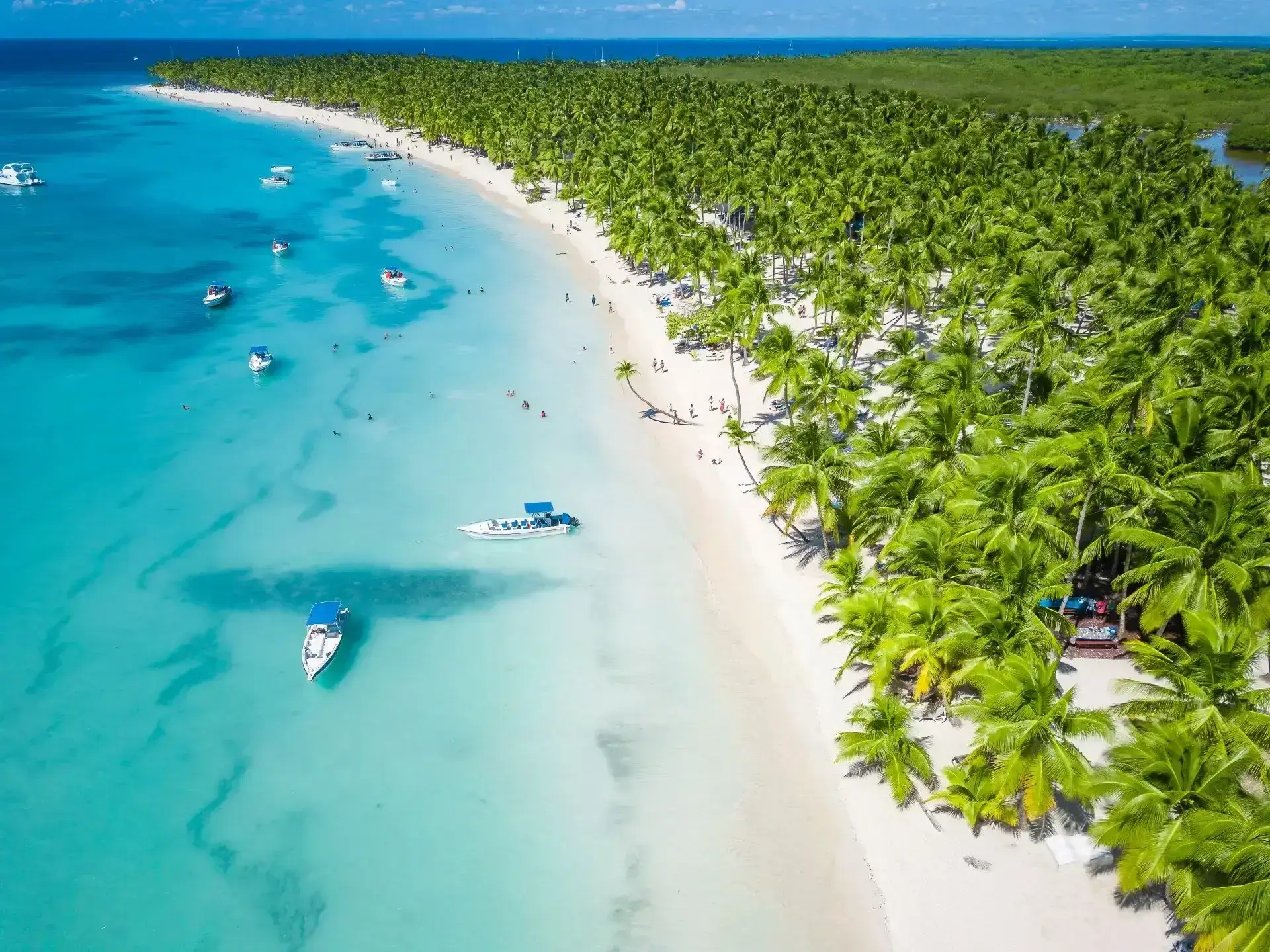
Bahía de las Águilas offers several kilometres of coastline characterised by light sand, turquoise-toned waters and an open landscape with practically no buildings.
That absence of development creates a very different feeling from the beaches attached to large tourist complexes.
It is a particularly good place for walking along the shore, swimming, resting, taking photographs and enjoying the landscape.
It is also important to understand that its untouched character means fewer services available.
Anyone visiting the area should do so with proper planning and bring everything needed to spend several hours on the beach.
Snorkelling and exploring nearby reefs
The clear waters of the area can be very appealing for those who enjoy snorkelling and observing marine life.
The experience will depend on sea conditions and the specific point from which the activity takes place.
As in any protected natural space, responsible behaviour is essential. Do not touch corals, remove natural elements or interfere with marine wildlife.
The aim should be to enjoy the environment while minimising any impact.
For travellers unfamiliar with the area, using a local guide or joining an organised excursion can make the experience easier and provide additional information about the natural features of the place.
Watching protected wildlife and plant life
The richness of Bahía de las Águilas goes far beyond the beach landscape.
The surroundings of Jaragua National Park are home to a wide variety of animal and plant species adapted to the different ecosystems of the Dominican southwest.
In the region you can find birds, reptiles, marine fauna and various plant species typical of dry and coastal environments.
For nature lovers, wildlife and plant watching can become one of the most interesting activities of the trip.
The landscape also offers numerous contrasts: coastal areas, rocky zones, dry vegetation and marine spaces coexist within a relatively compact territory.
This kind of environment makes Pedernales a destination very different from the usual tourist image of the Dominican Republic.
Boat trips and guided tours
One of the most popular ways to discover Bahía de las Águilas is by boat excursion.
The journey lets you contemplate the coastal formations from the water and reach different points of the bay.
There are also tours that combine the visit with other places of interest in the province of Pedernales.
This alternative can be especially recommended for travellers visiting the area for the first time, since it simplifies travel and makes better use of the available time.
Guided tours also provide context about the geography, biodiversity and environmental value of the territory.
Climate and the best time to visit
The climate in Pedernales is warm for much of the year and drier than in other parts of the Dominican Republic.
This makes it possible to visit Bahía de las Águilas during different months, although certain periods can be more comfortable due to weather conditions.
In general, the driest months tend to be especially interesting for those who want to do outdoor activities, travel by road and spend several hours on the beach.
Dry season and average temperatures
The dry season usually offers better conditions for exploring natural spaces.
During these months, the chances of sunny days are higher and travel can be more comfortable.
Temperatures generally remain warm, as is usual in the Caribbean, although how it feels can vary depending on wind, humidity and sun exposure.
At Bahía de las Águilas it is especially important to bear in mind the lack of large shaded areas.
The sun can be intense during the middle of the day, so it is worth adapting the length of the visit and protecting yourself properly.
Recommendations for a comfortable and safe visit

Preparation is essential to enjoy the excursion.
It is advisable to bring enough water, sunscreen, a cap or hat, light clothing, comfortable footwear and some food.
It is also worth having enough battery on your phone and arranging return transport in advance.
Those travelling with children should pay even more attention to hydration and sun exposure.
The area should not be approached as an urban beach with shops, restaurants and all kinds of services a few metres away.
That very absence of infrastructure is one of the reasons Bahía de las Águilas retains much of its appeal.
For travellers who prefer to have every kind of service available, there are very different alternatives in other parts of the Dominican Republic.
In Punta Cana, for example, new residential developments are evolving toward models where housing, leisure, dining, sport and everyday services can be found within a single environment.
The amenities at Larimar City respond precisely to that search for comfort among those who want to enjoy the country on holiday, for extended seasons or even as residents.
Frequently asked questions about Bahía de las Águilas
Can you spend the night at Bahía de las Águilas?
Bahía de las Águilas does not work as a conventional hotel area.
There is no large hotel offering directly on the beach, so most visitors organise the excursion as a day trip and stay in other parts of Pedernales.
If you want to spend the night near the protected area, it is worth checking available accommodation options and the rules applicable within natural areas in advance.
It is not advisable to assume you can camp freely at any point on the beach.
Is there car access or only by boat?
Bahía de las Águilas can be visited in different ways.
One option is to use suitable vehicles to travel along the land access routes of the area.
Another very popular alternative is to do the final stretch by boat, generally from points near Cabo Rojo.
The choice depends on the type of experience the visitor is looking for, the terrain conditions and how the excursion has been organised.
For a first trip, an organised tour can considerably simplify the logistics.
Is it suitable for families and children?
Yes, Bahía de las Águilas can be an interesting destination for families, as long as the visit is properly prepared.
Children can especially enjoy the sea, the landscape and the feeling of exploring a different natural space.
However, adults should keep several factors in mind: sun protection, enough water, food, limited shaded areas and the absence of nearby services.
Supervising children while swimming is also essential.
The experience can be very positive if it is organised with their needs in mind and avoiding the hours of greatest sun exposure.
What tourist services are available in the area?
The services directly available at Bahía de las Águilas are limited.
That is precisely one of the main features of the destination.
Most services related to transport, dining, accommodation or booking excursions are concentrated in nearby points and in the towns of the province of Pedernales.
That is why it is advisable to plan the day in advance.
Travellers should set off for the bay with everything they need and not depend on finding shops or restaurants directly on the beach.
This contrast helps explain the tourism diversity of the Dominican Republic.
While Bahía de las Águilas represents a model of protected nature and low-intervention tourism, other areas of the country have developed much more complete infrastructure.
Punta Cana is the best-known example. There, residential projects such as Larimar City seek to broaden the concept of a tourist destination and turn it into a place to live for long seasons, own a second home or invest in property.
Knowing both models lets you discover a much wider Dominican Republic.
A trip can combine days exploring the nature of the southwest with a more comfortable stay in an established destination.
Two sides of the same country
Bahía de las Águilas shows that the Dominican Republic goes far beyond its resorts. Its untouched beaches, protected landscape and the natural wealth of Pedernales offer an especially attractive experience for those who want to discover the country from a different perspective.
At the same time, the growth of residential destinations such as Punta Cana makes it possible to complement this kind of nature tourism with an increasingly broad offering of housing, services and leisure.
For international travellers, future residents or people interested in spending long seasons in the Caribbean, exploring both sides of the country may be the best way to understand everything that living, travelling or investing in the Dominican Republic can offer.
Featured projects
Explore the residential projects of Larimar City mentioned in this article.



Smart Investment
Join the first Smart City in the Caribbean. Discover how Larimar City redefines safety and property value in Punta Cana.
Request information