
Heading to Punta Cana: What to Know, What to Pack and What You Can Leave at Home
 Victoria Méndez · Communications Department
There are details that seem small until you land in another country.
Imagine you travel from Spain to Punta Cana. You arrive at the hotel, go to charge your phone and discover that your plug does not fit. The Dominican Republic uses 110 volts and North American style sockets, so that small adapter that takes up almost no space can become one of the essentials of the trip.
The same goes for the weather, money, documentation and even clothing. Do you need to bring dollars? Does it rain a lot in September? Do you need a visa? What really deserves a place in your suitcase?
Let's take it step by step.
When to travel to Punta Cana?
The short answer: any time of year.
Punta Cana keeps warm temperatures all year round and the driest season is concentrated, broadly speaking, between December and April.
Between December and early March, daytime temperatures usually hover around 25-27 °C, with slightly cooler mornings and evenings. From May to November rainfall increases, but this does not necessarily mean spending entire days under the rain. In the Dominican tropical climate, rain episodes tend to be short.
If you travel between June and November: bear in mind that it coincides with the official Atlantic rainy season. Check the forecast and weather recommendations before and during your trip, especially in the months of greatest activity.
So what should you bring? Even if you travel in the dry season, a light rain layer takes up little space and can come in handy.
Passport, E-Ticket and entry to the country
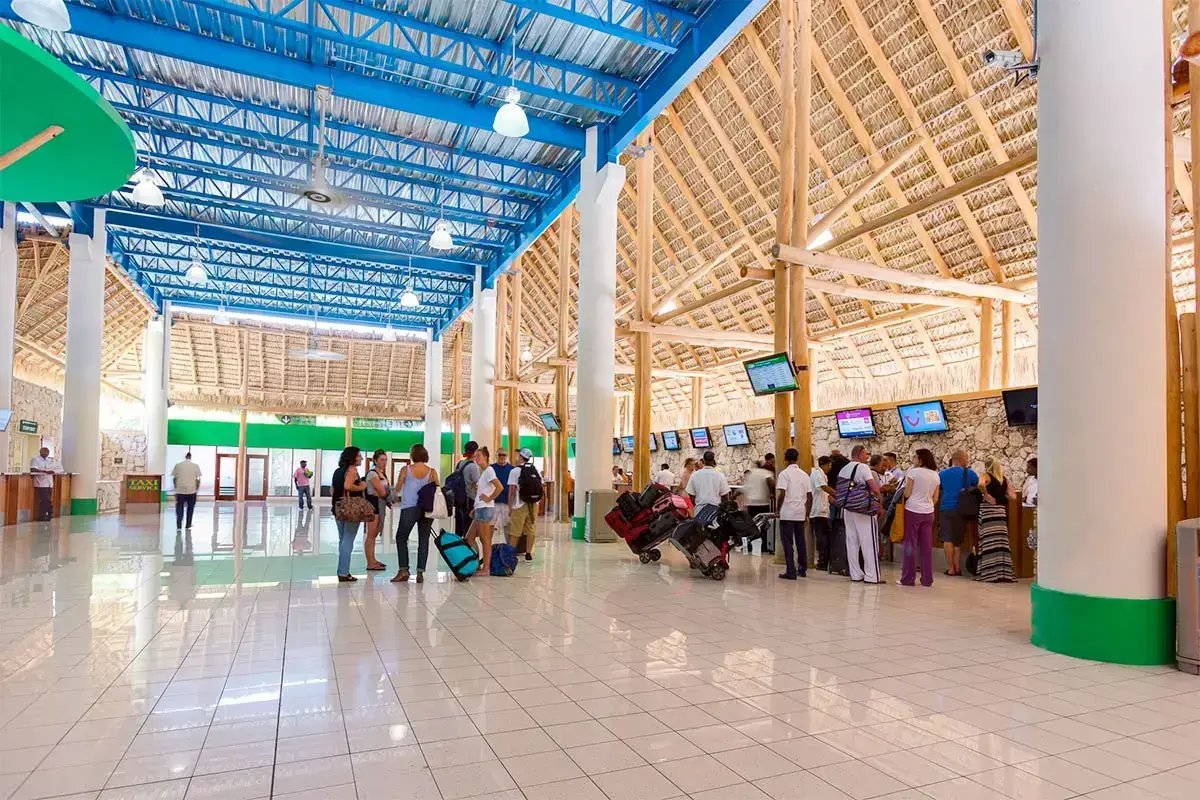
Before thinking about your swimsuit, check your documentation.
Requirements depend on your nationality. Currently, travellers from the United States, Canada, the United Kingdom, the European Union and many Latin American countries can enter as tourists without applying for a Dominican visa in advance. There are also requirements regarding passport, return ticket and other documents, so it is always worth checking the official conditions before flying.
There is another name you should remember: E-Ticket.
It is the free electronic form required for passengers entering or leaving the Dominican Republic on commercial flights. You can complete it as soon as you have your flight details, and you must do so before reaching the airline counter.
Practical tip: complete it before leaving home and save the QR code on your phone.
Pesos, dollars or card?
The official currency is the Dominican peso (RD$), but in a tourist area like Punta Cana you do not need to rely on cash alone.
For most travellers, a simple combination works well: card for hotels, restaurants, supermarkets and major purchases, and Dominican pesos for small expenses, tips and places where paying in cash is more practical.
If you need to withdraw or exchange money, you will find ATMs, banks and exchange offices in the main commercial areas.
And here is a simple recommendation: do not exchange large amounts of money before knowing how much cash you will actually use.
What clothes to bring to Punta Cana?
Here you really can save quite a lot of space.
For the daytime, think linen, cotton and light fabrics: shorts, dresses, T-shirts, cool shirts and, of course, swimwear.
For the evening, add one or two smarter options if you plan to go out for dinner. A shirt, dress or light outfit will be far more useful than filling your suitcase with clothes you probably will not wear.
It is also worth bringing a thin layer for air-conditioned places and rainy days.
As for footwear: beach or pool: sandals. Excursions and walks: comfortable trainers. Golf or sports activities: spikes or tennis shoes. You do not need a different shoe for every plan.
The small things that do deserve space
There are four things worth having on hand from day one: sunscreen, insect repellent, sunglasses and a cap or hat.
If you have excursions planned, a reusable bottle can also be useful.
Can you buy all of this in Punta Cana? Yes. But bringing your usual products, especially sunscreen or repellent, saves you from having to look for them as soon as you arrive.
No specific vaccines are required to visit the country; if you have any doubts you can check with your doctor. There are no global health recommendations in place.
And back to the plug: do you need an adapter?
If you are coming from Spain or other European countries, yes, you should bring one.
The Dominican Republic uses 110 V / 60 Hz and North American style sockets. Before travelling, check the label on your chargers: many phones, computers and current devices accept different voltages, but not all appliances do.
If your charger is compatible with 110 V, you will normally only need to adapt the plug.
A universal adapter and you are set, because nobody wants to start their holiday with their phone at 3 % battery. If you want to be extra safe, bring your power bank.
And what if you forget something?
Here comes the good news: you are not travelling to a destination where you have to bring everything from home.
In Punta Cana and Bávaro there are large supermarkets such as Jumbo, Nacional and Sirena, as well as other local shops.
For example, Jumbo Bávaro is located in Downtown Mall and Supermercado Nacional has a presence on Boulevard Punta Cana.
You will also find major shopping centres. BlueMall Puntacana, for instance, brings together more than 100 shops and restaurants, while Downtown Mall concentrates shops, a supermarket and other services in the Bávaro-Punta Cana area.
So if you forgot your sandals, need personal care products, want to buy clothes or simply prefer to travel with less luggage, you can solve a good part of those needs once you are here.
And this leads us to a different question: what if you did not even have to leave your own surroundings to find a good part of those services?
Larimar City: travelling light is also part of the experience
There are those who pack with a list in hand and those who prefer to travel with the essentials: passport, phone and wallet.
At Larimar City & Resort, both can rest easy.
Its Smart City concept is designed to integrate accommodation, restaurants, shops, financial services, personal care, sport, leisure and other everyday services within a single environment.
This means that enjoying Punta Cana does not have to involve planning every small need before travelling, nor constantly moving around to resolve it.
So let's go back to the question we started with: what can you leave at home?
Probably more than you imagine.
So take note: what does go into the suitcase?
- Passport and documentation.
- E-Ticket ready.
- Light clothing.
- Swimwear.
- Sunscreen and insect repellent.
- Comfortable footwear.
- An adapter if you are coming from Europe.
- Card and some cash.
The rest will depend on how you want to experience Punta Cana.
Written by
Victoria Méndez
Communications Department
Featured projects
Explore the residential projects of Larimar City mentioned in this article.



Smart Investment
Join the first Smart City in the Caribbean. Discover how Larimar City redefines safety and property value in Punta Cana.
Request information