Dominican Carnival: identity, culture, and international tourism appeal
Dominican Carnival: identity, culture, and international tourism appeal
The Dominican Carnival is much more than a festive event. It's a living expression of the history, identity, and cultural blending that defines the Dominican Republic. Every February, the country transforms into a stage of intense colors, contagious music, and ancestral symbols that connect the past with the present.
For the international visitor, the carnival represents an authentic, immersive, and deeply emotional experience. For the country, it's one of the pillars of cultural tourism — a segment that attracts travelers interested in history, art, and local traditions.
Origins of the Dominican Carnival
The roots of the Dominican carnival go back to the colonial era, when European traditions merged with African and Taíno elements. This mix gave rise to unique celebrations charged with symbolism and creativity.
Over time, each region of the country developed its own interpretation of the carnival, adapting characters, masks, and rituals that reflect its local identity. Today, this diversity is one of the carnival's greatest attractions.
A journey through the provinces: diversity in every mask
La Vega: cradle of the Dominican carnival
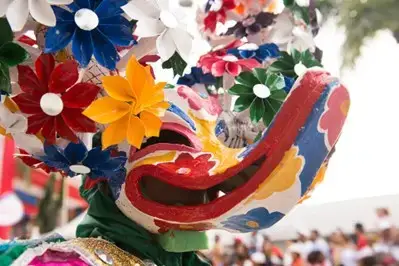
The Vegano Carnival is the oldest and most recognized in the country. Its emblematic Diablos Cojuelos stand out for their handcrafted masks, with exaggerated features, bright colors, and imposing horns. Each costume can take months to make and represents true artistic work. This level of detail has made La Vega a Caribbean cultural reference.
San Pedro de Macorís: the Guloyas
In San Pedro de Macorís, the carnival takes on a different dimension with the presence of the Guloyas, declared Intangible Cultural Heritage of Humanity by UNESCO. Their dances, feathered costumes, and dramatizations represent the legacy of the cocolo immigrants, adding a strong historical and educational component to the event.
Santiago de los Caballeros: the Lechones
In Santiago, the Lechones are the protagonists. Their zoomorphic masks, simulating pigs or bulls, symbolize the strength, character, and pride of the Cibao region. The Santiago carnival groups are characterized by their energy, intense music, and community organization that involves entire neighborhoods.
The carnival as a driver of cultural tourism
In recent years, the Ministry of Tourism has promoted the carnival as a structured tourism product, integrating it within the country's international promotion strategy. Today, the carnival attracts:
- Cultural tourists from Europe and North America
- Travelers interested in authentic experiences
- Photographers, artists, and content creators
Carnival tours have also been developed that allow visitors to:
- Enter mask workshops
- Meet the artisans
- Understand the symbolism behind each character
Economic and social impact
The Dominican Carnival generates significant economic impact at local and national levels. During February, hotels, restaurants, transportation, and businesses see a notable increase in demand. Socially, the carnival:
- Preserves centuries-old traditions
- Generates cultural and artisanal employment
- Strengthens the sense of community belonging
This balance between culture and economy makes the carnival a successful model of sustainable tourism.
Carnival, craftsmanship, and the creative economy
One of the carnival's greatest values is its link with local craftsmanship. The masks and costumes are made by hand by master artisans who transmit their knowledge from generation to generation. This creative economy not only keeps traditions alive — it also positions the carnival as a cultural product with high added value.
The Dominican carnival in the international context
Globally, the Dominican Carnival competes with great cultural celebrations of the world. Its authenticity, regional diversity, and strong identity make it a unique event in the Caribbean.
Each year, more international visitors plan their trip specifically to experience the carnival, integrating it within a broader tourism experience that includes beaches, gastronomy, and historical heritage.
Conclusion: tradition that drives the future
The Dominican Carnival isn't just a celebration of the past; it's a strategic tool for the development of cultural tourism and the country's international projection. By preserving its traditions and adapting them to new tourism dynamics, the Dominican Republic shows that culture can be a sustainable economic driver and a powerful calling card for the world.
To live the carnival is to understand the country's essence: joyful, resilient, creative, and deeply proud of its identity.
Deborah Hernández Soto
Communications Department
Featured projects
Explore the residential projects of Larimar City mentioned in this article.



Smart Investment
Join the first Smart City in the Caribbean. Discover how Larimar City redefines safety and property value in Punta Cana.
Request informationMore Articles

Biophilic design: conscious architecture that improves quality of life and cuts environmental impact

Slow living and integrated wellness: the Caribbean answer to global stress