The Larimar Casa Club: stone, light, and gathering
The Larimar Casa Club: stone, light, and gathering
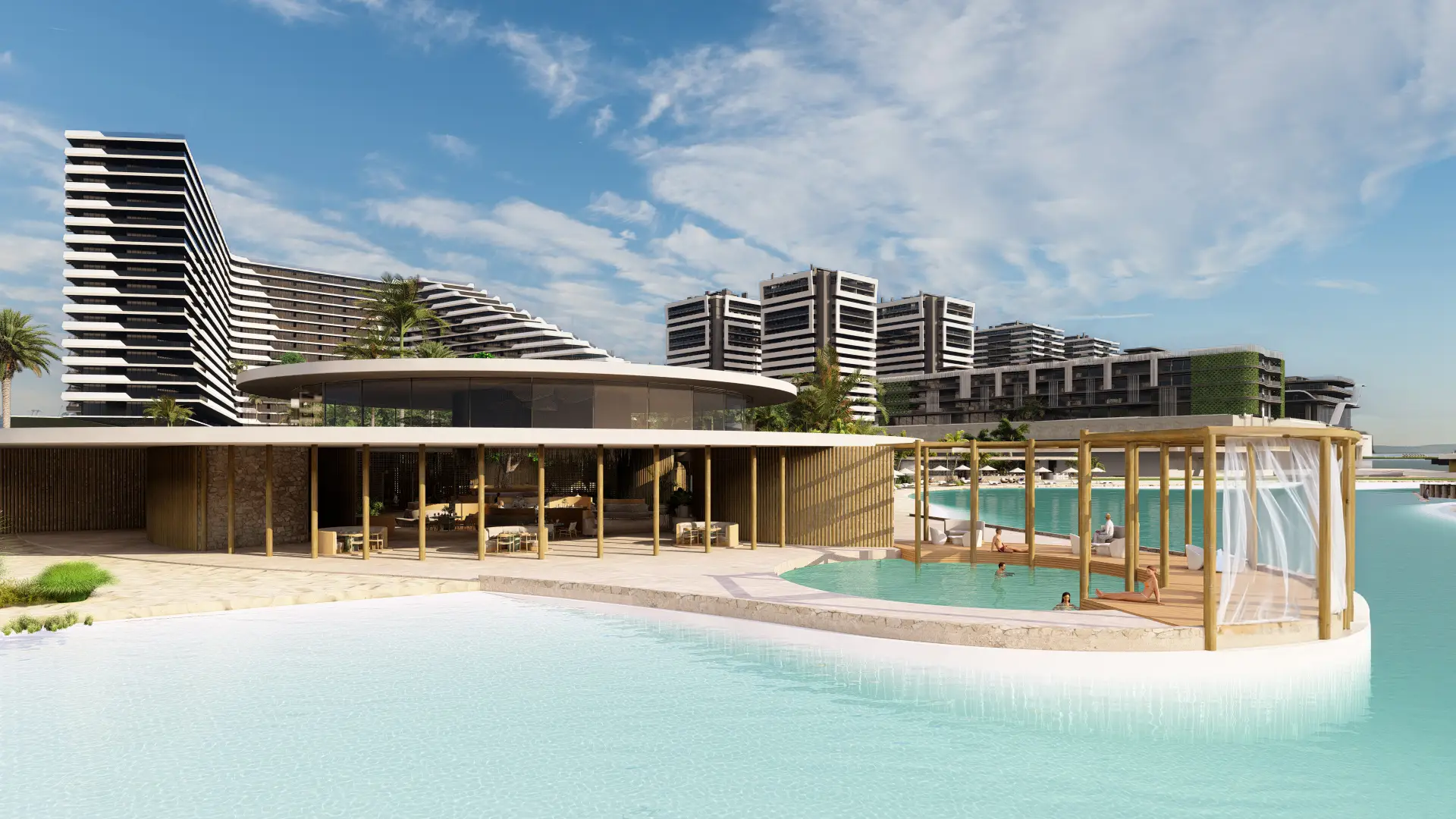
Designing the Casa Club of Larimar was, from the start, an exercise in listening to what the land and the project's vision had to say. In Larimar City, coral stone isn't just a construction material — it's the emblem that unites the city, the guiding thread of its spaces, and the symbol of an identity rooted in the land itself. The Casa Club only reaffirms that gesture: raising great walls of rough coral stone that, like guardians, frame the experience of those who cross its spaces.
The design of the Casa Club: a fusion of nature and architecture
That stony force coexists with softer surfaces, such as the polished coral stone on the floors, which offers a fresh and friendly finish — almost inviting you to walk barefoot at some moment of the journey. Above it rise high ceilings in microconcrete, which at certain points reach double height, allowing natural light — both zenithal and lateral — to penetrate freely and slide over the stone. The result is a building that changes with the hours of the day: there are moments when it appears solid and solemn, and others when it opens and breathes alongside its surroundings.
A social space full of gastronomy, art, and culture
The program of the Casa Club was woven as a sequence of spaces that accompany different ways of inhabiting. From the entrance lobby, which welcomes the visitor with breadth, the route opens to bar and restaurant areas designed to extend the city's experience toward gastronomy and social life. Toward the back edge, the deck integrates with the water, generating a natural pool that prolongs the sense of horizon. But beyond these main spaces, there are others that complete the experience: transitional and open areas that not only connect functions but are designed as settings for temporary exhibitions of art, fashion, or culture.
A circular patio at the heart of the Casa Club
At the center of the Casa Club, like a green heart, a small circular patio opens up. There, a leafy tree — a flamboyant or perhaps a guayacán — will provide shade and mark the building's natural pulse. That decision was essential: we wanted nature not to be outside, observed from the windows, but inside — growing as part of the architecture itself. That gesture of the patio, open to the sky, is also a declaration about how we imagine life in Larimar: interior and exterior in constant conversation, without rigid boundaries.
Organic architecture and curved forms
The curved forms, which run throughout the project's master plan, also appear here — though never literally. They are curves that break, that interrupt, that let light pass through or guide the air. In those ruptures lies the building's richness: we don't seek perfect, continuous lines, but organic gestures that dialogue with the imperfection of the terrain and with the vitality of the Caribbean.
A reinterpretation of contemporary Dominican architecture
The Casa Club is, in that sense, a reinterpretation of contemporary Dominican architecture. It doesn't seek to imitate foreign languages or reproduce prefabricated images, but to work with what belongs to us: coral stone as identifying material, openness to light and wind, and the possibility for spaces to become gathering points where the community recognizes itself.
The Casa Club as a symbol of community in Larimar City
In the end, more than a building, the Casa Club wants to be a place of belonging. A space in which architecture not only contains functions but also inspires moments: a shared meal, an afternoon of shade under a tree, a route that becomes a cultural exhibition. A space where luxury is understood not as excess, but as the possibility of living surrounded by what's essential: the land, the stone, the water, the light, and the community.
By the Architecture Department
Alondra García Belén
Architect
Featured projects
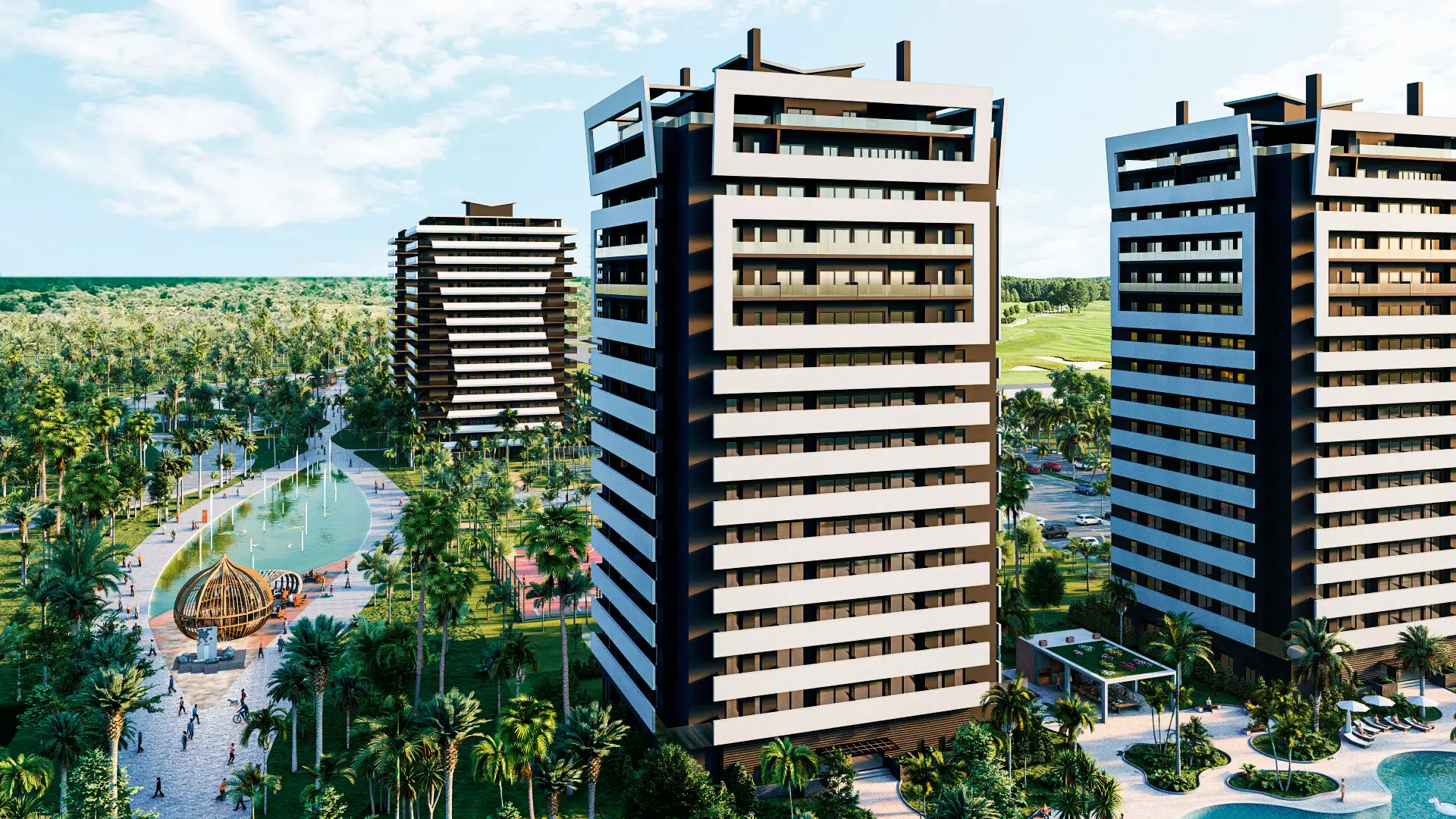
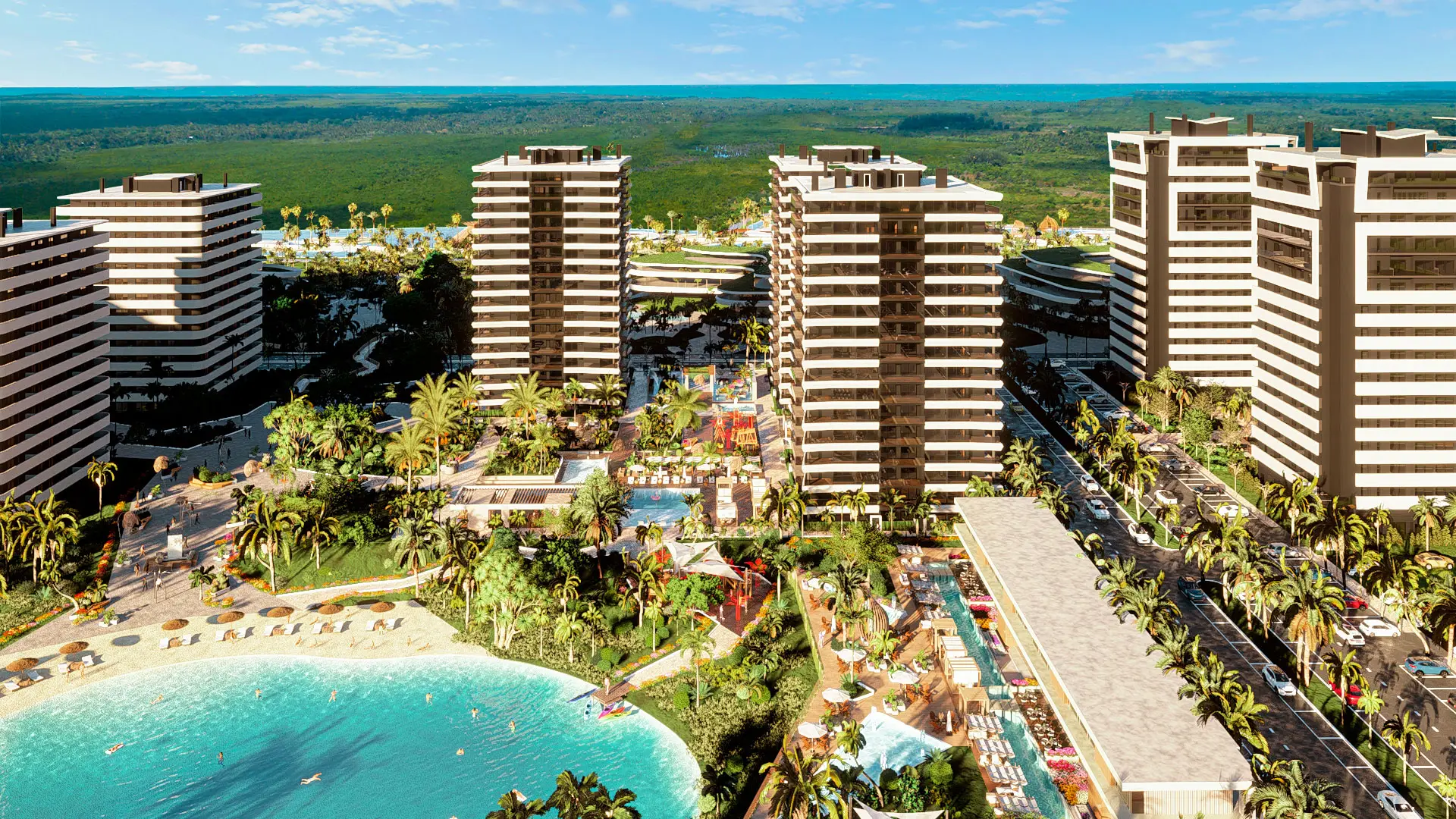
Explore the residential projects of Larimar City mentioned in this article.
Smart Investment
Join the first Smart City in the Caribbean. Discover how Larimar City redefines safety and property value in Punta Cana.
Request information