Latin music: identity, diversity, and the sound of the Caribbean
Latin music: identity, diversity, and the sound of the Caribbean
Latin music is one of the most influential cultural expressions in the world. Its strength lies in the diversity of its rhythms and in its ability to convey identity, history, and emotion through a universal language.
From the Caribbean to global stages, Latin music has managed to connect cultures, break boundaries, and position itself as a reference within the music industry. More than a genre, it's a way of living and feeling.
Roots of Latin music: a cultural identity
Latin music is born of a unique mix of cultures that, throughout history, have shaped its characteristic sound.
Its main influences include:
- African rhythms, which provide the rhythmic foundation and percussion
- European traditions, which introduce melodies and instruments
- Indigenous cultures, which add identity and connection to the territory
This fusion has given rise to a musical diversity that represents the essence of each country.
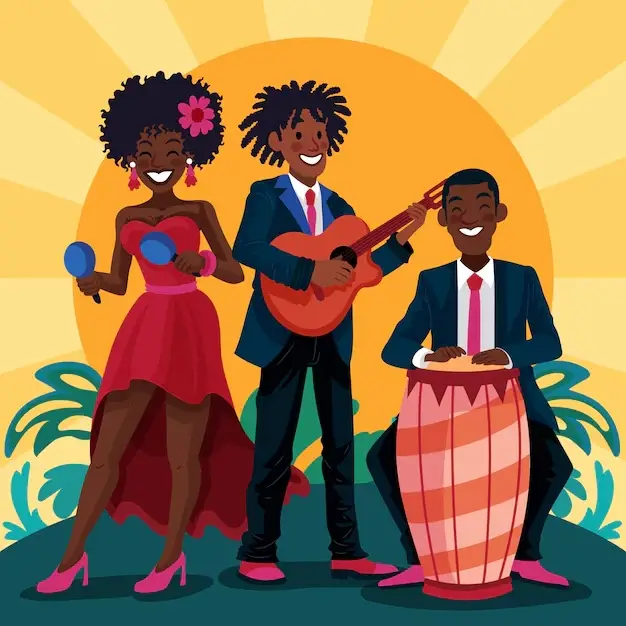
In the Dominican Republic, for example, merengue and bachata are part of everyday life. They aren't just heard — they're lived in every celebration, in every social gathering. Artists like Juan Luis Guerra have managed to project these rhythms internationally, preserving their authenticity and cultural essence.
The Caribbean: heart of Latin music
The Caribbean is the emotional core of Latin music. It's a region where rhythm is part of daily life and becomes a natural extension of the culture.
Some of the most important contributions from the Caribbean include:
- Cuba: cradle of son, salsa, and mambo
- Dominican Republic: home of merengue and bachata
- Puerto Rico: epicenter of reggaeton
These influences have built the foundation of the modern Latin sound.
Iconic figures like Celia Cruz brought these rhythms to the world, becoming symbols of Latin identity. Her legacy is still present in today's music, inspiring new generations of artists.
The evolution of Latin music in the modern era
Latin music has constantly evolved, adapting to new trends and technologies without losing its essence.
In recent decades, genres have emerged that have transformed the music industry:
- Reggaeton
- Latin trap
- Latin pop
- Fusions with electronic music
Puerto Rico has been key in this evolution. Artists like Daddy Yankee laid the foundations of modern reggaeton, while Bad Bunny has taken the genre to a global dimension.
This growth has allowed Latin music to move beyond being a regional phenomenon and become a dominant trend worldwide.
Musical diversity: each country's contribution
One of Latin music's greatest values is its diversity. Each country brings unique sounds that enrich the musical landscape.
Among the main contributions stand out:
- Colombia: cumbia and vallenato
- Mexico: mariachi and regional music
- Argentina: tango and new urban fusions
Artists like Shakira have managed to fuse the traditional with the contemporary, bringing Latin music to new audiences.
This diversity allows Latin music to evolve constantly, keeping its freshness and relevance.
The global impact of Latin music
Latin music has achieved a solid presence in the global industry. Its influence extends beyond music, impacting different sectors.
Today, its impact is reflected in:
- Fashion and lifestyle
- Cinema and entertainment
- Cultural tourism
Digital platforms have been key to this growth. Tools like Spotify have allowed Latin artists to reach global audiences instantly.
In addition, collaborations between Latin and international artists have strengthened their positioning, turning Latin music into a universal language.
Latin music as a way of life
Beyond the stage, Latin music represents a way of life. It's present in the way we celebrate, share, and connect with others.
In the Caribbean, music is part of social identity. It's lived in the streets, at family gatherings, and in every cultural expression.
This emotional connection is one of the reasons Latin music has so much impact. It's not just about listening to it — it's about feeling it and living it.
An expression in constant evolution
Latin music continues to transform, integrating new sounds and adapting to new generations.
This evolution allows it to:
- Maintain its global relevance
- Connect with different cultures
- Innovate without losing its essence
Each artist brings a new vision, enriching the movement and ensuring its continuous growth.
Conclusion: the rhythm that connects the world
Latin music is the result of a shared history that has evolved over time without losing its essence.
From the traditional rhythms of the Caribbean to today's urban sounds, each genre represents part of a cultural identity that continues to expand.
Today, Latin music not only dominates the music industry — it also defines a way of living, of feeling, and of connecting with the world.
Because in every rhythm, the Caribbean keeps speaking…
and the world keeps listening.
Deborah Hernández Soto
Communications Department
Featured projects
Explore the residential projects of Larimar City mentioned in this article.



Smart Investment
Join the first Smart City in the Caribbean. Discover how Larimar City redefines safety and property value in Punta Cana.
Request information