From a Privileged Natural Reserve on the Farallón: 5 Places to Keep Discovering Punta Cana's Nature
 Victoria Méndez · Communications Department
There are places where nature is a getaway. And there are others where it is part of the place we call home.
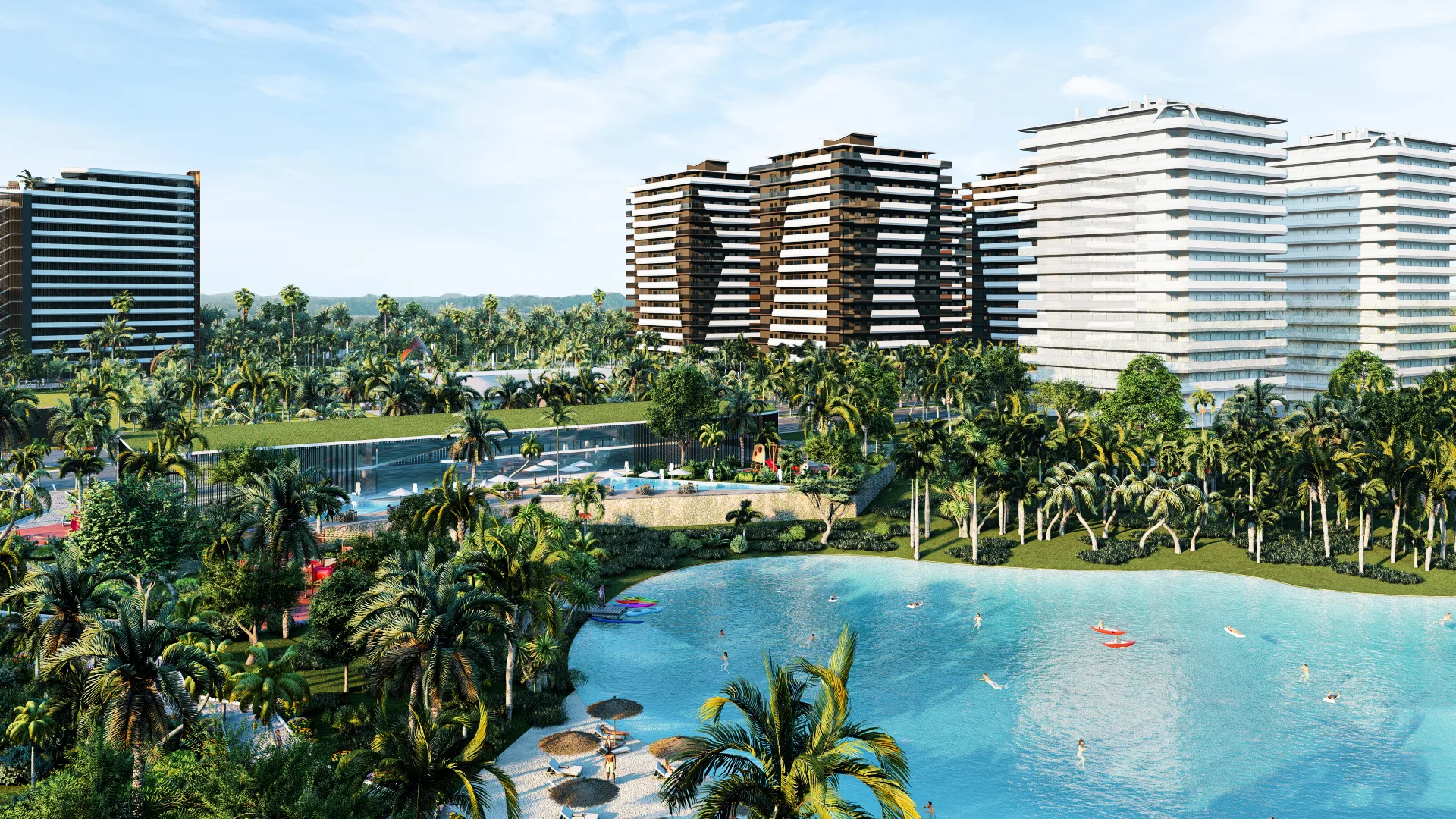
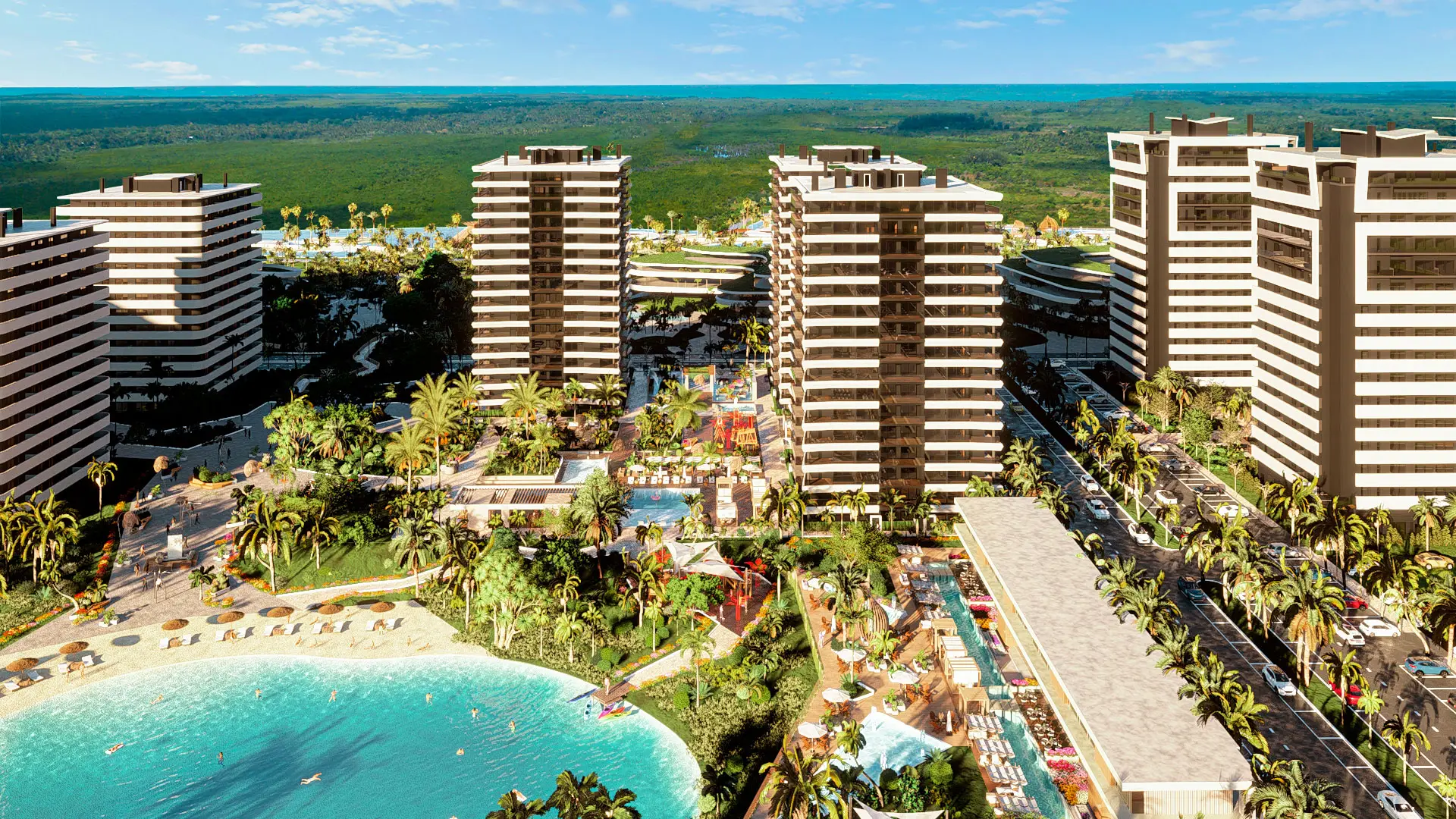
At Larimar City & Resort, that relationship begins at the Farallón. Its landscape, its vegetation and the presence of a privileged natural setting make it possible to enjoy a side of Punta Cana that often takes a back seat to the international image of its beaches.
But living surrounded by nature is only the beginning.
Punta Cana and the eastern region of the Dominican Republic also hide crystal-clear cenotes, tropical forests, ancient caves and large protected areas that let you discover the territory from a completely different perspective.
Some are just minutes away. Others are perfect for a full-day getaway.
They all have something in common: they remind us that living in the Caribbean does not only mean having the sea nearby. It also means being able to leave home and find some of the most singular natural landscapes in the Dominican Republic.
These are five experiences we recommend discovering.
1. Hoyo Azul
When we think of turquoise waters in Punta Cana, our first image is probably the Caribbean.
Hoyo Azul proves there is another possibility.
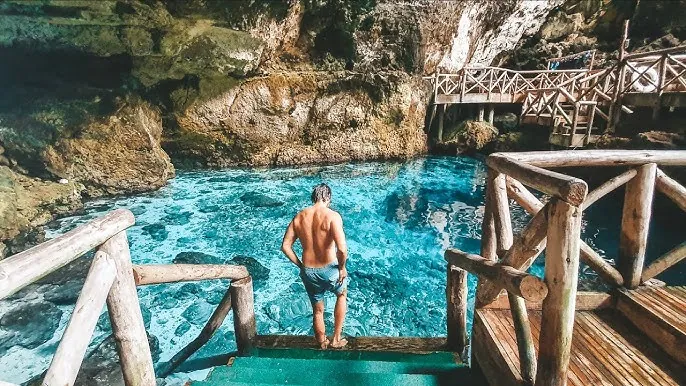
Located inside Scape Park, in Cap Cana, this natural cenote is surrounded by tropical vegetation at the foot of a limestone cliff roughly 75 metres high. Its spring waters reach a depth of around 14 metres.
But getting to the water is part of the experience.
The trail crosses a natural environment with tropical flora and an orchid garden before reaching the cenote. Once there, the landscape changes completely: the rock, the vegetation and the intense blue of the water create a scene that is hard to associate with the best-known image of Punta Cana.
And perhaps that is precisely its appeal.
You do not need to leave the destination to feel you have arrived somewhere else.
A morning can begin by the sea and, a few hours later, continue swimming in fresh water surrounded by nature.
Hoyo Azul shows a more adventurous side of Punta Cana and is a good option for those who enjoy outdoor plans without giving up proximity.
2. Ojos Indígenas Ecological Reserve
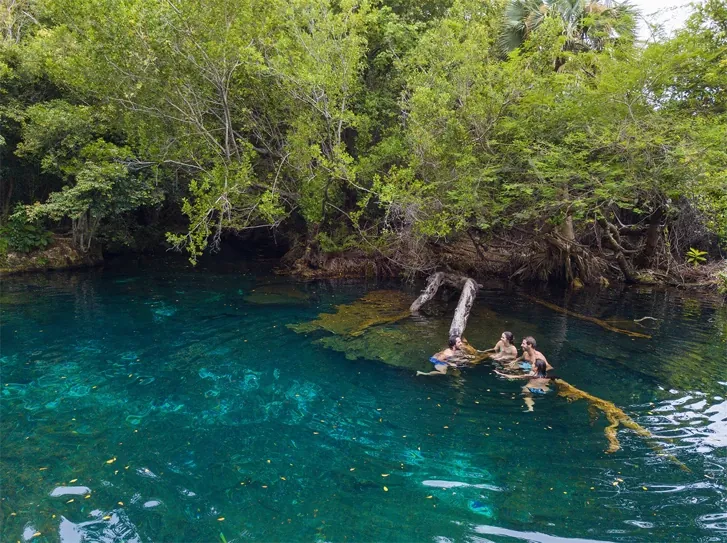
Some experiences do not need great distances to help us disconnect.
The Ojos Indígenas Ecological Reserve, located within Puntacana Resort & Club, protects more than 1,500 acres devoted to conservation and environmental education.
Within this space there are tropical forests, native fauna and twelve freshwater lagoons, known as "ojos" (eyes). Four of them are open for swimming, including Inriri and Cacibajagua.
Here the plan begins on foot.
The trails let you gradually move into the vegetation, observe local species and discover the lagoons among the forest.
It is not just a place for a swim. It is also a chance to get to know another part of Punta Cana's natural heritage and understand the conservation work being carried out around these ecosystems. The Puntacana Foundation itself defines the reserve as a space for educational, scientific and recreational purposes.
For those who live in Punta Cana, that proximity has a different value.
An ecological reserve stops being just an excursion we discover on holiday. It can become the setting for a different kind of morning, a walk, a family plan or simply a way to disconnect from the routine.
Because when nature is close, the way we use our free time changes too.
3. Cueva de las Maravillas
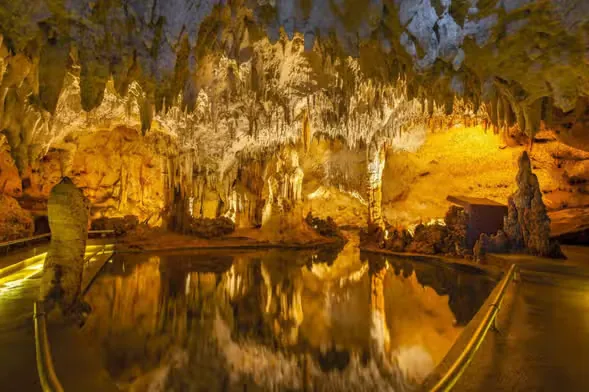
Not all the natural wealth of the Dominican east is in plain sight.
Between San Pedro de Macorís and La Romana we find a place where nature, geology and history meet underground.
The Cueva de las Maravillas holds hundreds of Taíno pictographs and petroglyphs preserved in a cave system where stalagmites and stalactites can also be observed.
The experience completely changes the rhythm of the trip.
After the sun and the tropical vegetation, we descend into a space where the temperature, the light and even the perception of time are different.
And then the traces of those who inhabited the island centuries before us appear.
That turns the visit into something more than a nature experience.
It also brings us closer to a part of the history of the Dominican Republic from the very territory where it happened.
Another interesting aspect is its accessibility. The site has lighting, ramps, trails and a lift, making it easier for different kinds of visitors to explore it.
From Punta Cana, its location also makes it easy to include in a route toward La Romana or Santo Domingo.
It can be a stop along the way.
Or it can be the reason to plan the trip.
Because sometimes discovering the Dominican Republic means looking toward the horizon.
And other times, looking beneath our feet.
4. Padre Nuestro Cave
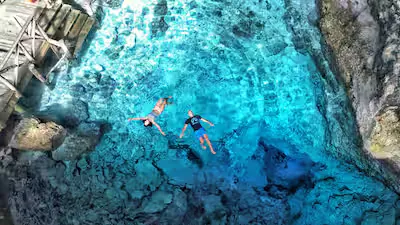
Continuing toward Bayahíbe we find another landscape.
The Padre Nuestro area is part of Cotubanamá National Park, one of the great protected spaces of the eastern region.
The Ministry of Environment highlights that this section preserves tropical forest with different environments, ecosystems and habitats that support significant biological diversity.
Here the experience feels closer to exploration.
Forest, trails and underground formations reveal a territory where water and stone have been shaping the landscape for a very long time.
But Padre Nuestro also helps us understand something broader.
The natural spaces we enjoy today need conservation.
In 2024, the Ministry of Environment formalised a co-management agreement for the Padre Nuestro section of Cotubanamá National Park together with social organisations and the tourism sector of La Romana - Bayahíbe, seeking to strengthen the protection and sustainable management of the area.
That component gives the visit another dimension.
It is not just about arriving, observing and leaving.
It is also about understanding that we are entering a protected ecosystem and that the way we enjoy it must be compatible with its conservation.
For those who live in Punta Cana, Padre Nuestro can become one of those plans that justify setting aside a day and driving toward Bayahíbe to discover a different part of the east.
5. Cotubanamá National Park
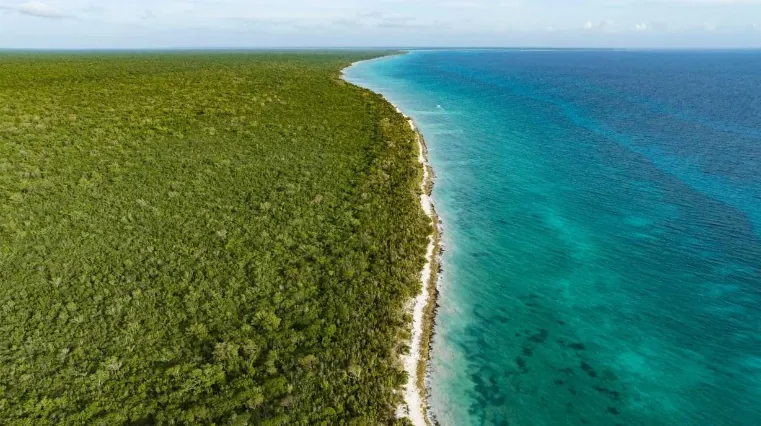
And finally we arrive at the space that connects several of these experiences within a much larger territory.
Cotubanamá National Park, historically known as Parque Nacional del Este, is officially part of the National System of Protected Areas of the Dominican Republic.
Here the scale changes.
We are no longer talking only about a cave or a cenote, but about a great protected space where different ecosystems coexist and where every visit can offer a different experience.
Its relevance within Dominican natural heritage is considerable. In fact, the Ministry of Environment has placed it among the most visited protected areas in the country.
And that is easy to understand.
Cotubanamá combines nature, hiking, caves, coastline and sea experiences. Its location around Bayahíbe also makes it one of the great starting points for discovering the natural landscape of the Dominican southeast.
It is one of those places that are hard to exhaust in a single visit.
One day we can approach it along its trails.
Another, discover one of its caves.
And another can continue toward the waters that surround this part of the Caribbean.
For those visiting the Dominican Republic for a week, it can become a memorable excursion.
For those who live here, it represents something even better: a place we can always come back to.
Punta Cana is also discovered among forests, caves and cenotes
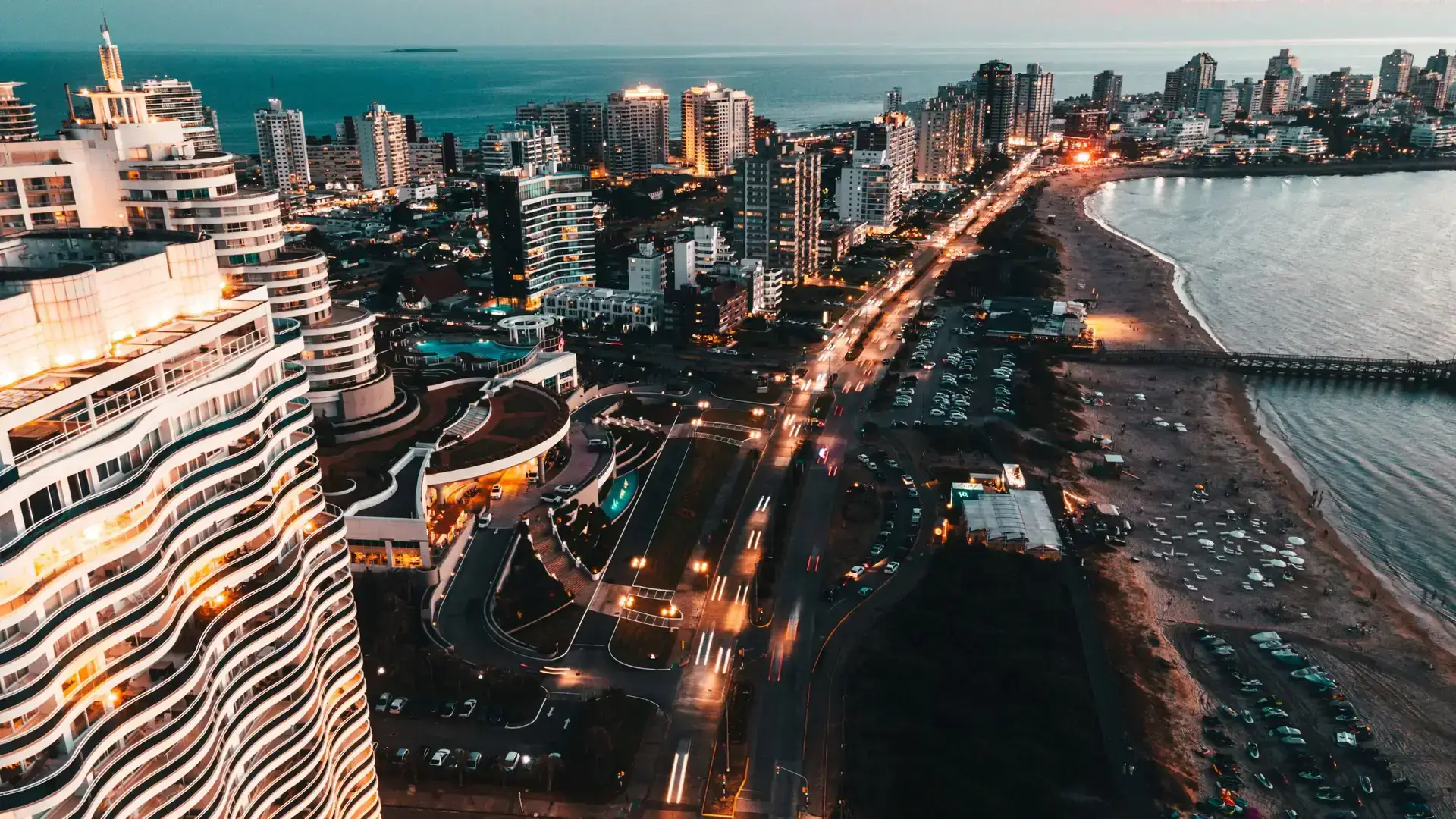
The beaches will remain a fundamental part of Punta Cana's identity.
And they probably always will be.
But reducing the destination to the sea alone means leaving out a fascinating part of its territory.
Very close to the residential and tourist areas we find tropical forests, freshwater lagoons and cenotes.
If we extend the route a little toward La Romana and Bayahíbe, caves, expressions of Taíno culture and large protected areas appear.
This diversity is especially relevant at a time when Punta Cana is also evolving as a residential destination.
Because when we choose a place for a holiday, we look for experiences for a few days.
When we choose a place to live, we look for experiences for many years.
Living close to nature is also quality of life
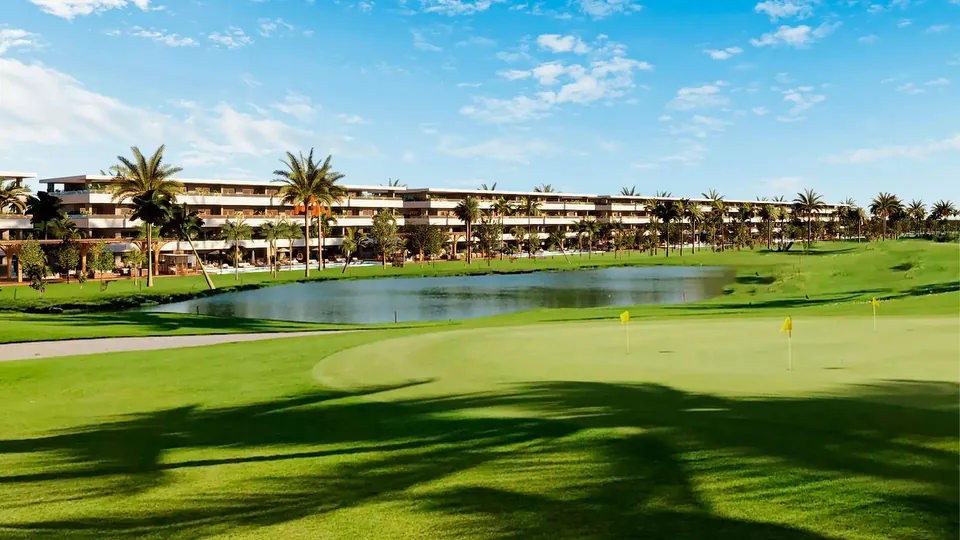
The way we understand quality of life is changing.
It no longer depends only on our home or the services we have nearby.
What happens when we step out of the house also matters.
Having spaces to walk.
Playing sport. Breathing fresh air.
Sharing activities with the family.
Finding places to disconnect.
And having an environment that still has new things to teach us.
That is where Punta Cana's natural wealth takes on a different meaning for residents and owners.
Hoyo Azul can be an adventure.
Ojos Indígenas, a quiet morning.
The Cueva de las Maravillas, a cultural experience.
Padre Nuestro, a day of exploration.
Cotubanamá, a getaway that can be repeated again and again.
We do not need to choose a single way of relating to nature. The territory allows us to have them all.
At Larimar City, nature begins at home
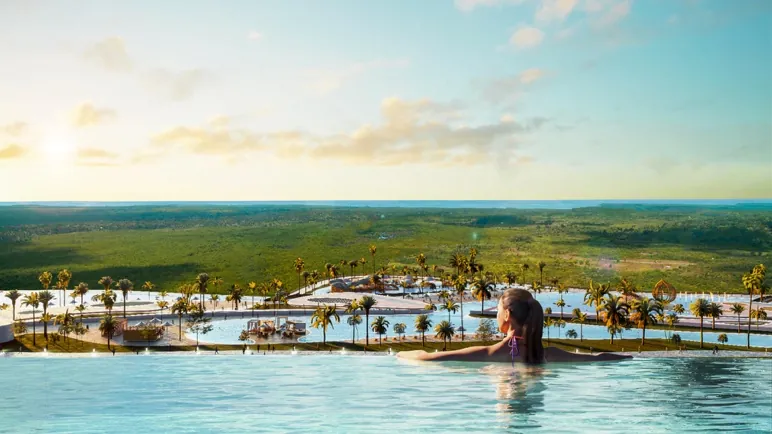
That relationship with the environment takes on an especially important meaning at Larimar City & Resort.
Here, the Farallón is not simply an image we observe in the distance.
It is part of the landscape that accompanies the experience of the city and of a vision where nature, wellbeing, sport, open spaces and urban life can coexist in a single place.
For Larimar City, being well connected does not only mean having services, beaches or an international airport nearby. It also means having access to an extraordinarily diverse territory that benefits both leisure and standards of wellbeing and health.
Written by
Victoria Méndez
Communications Department
Featured projects
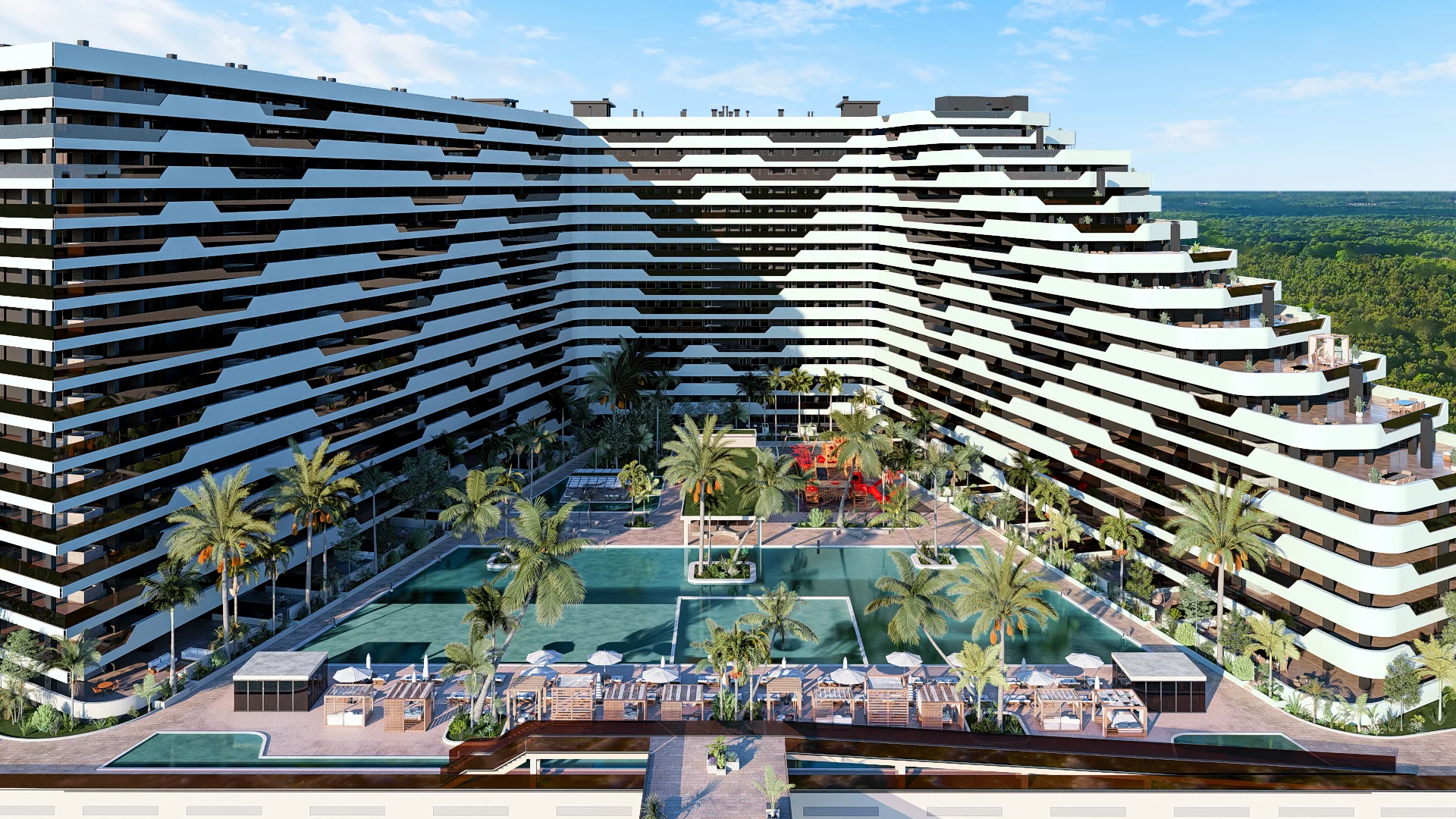
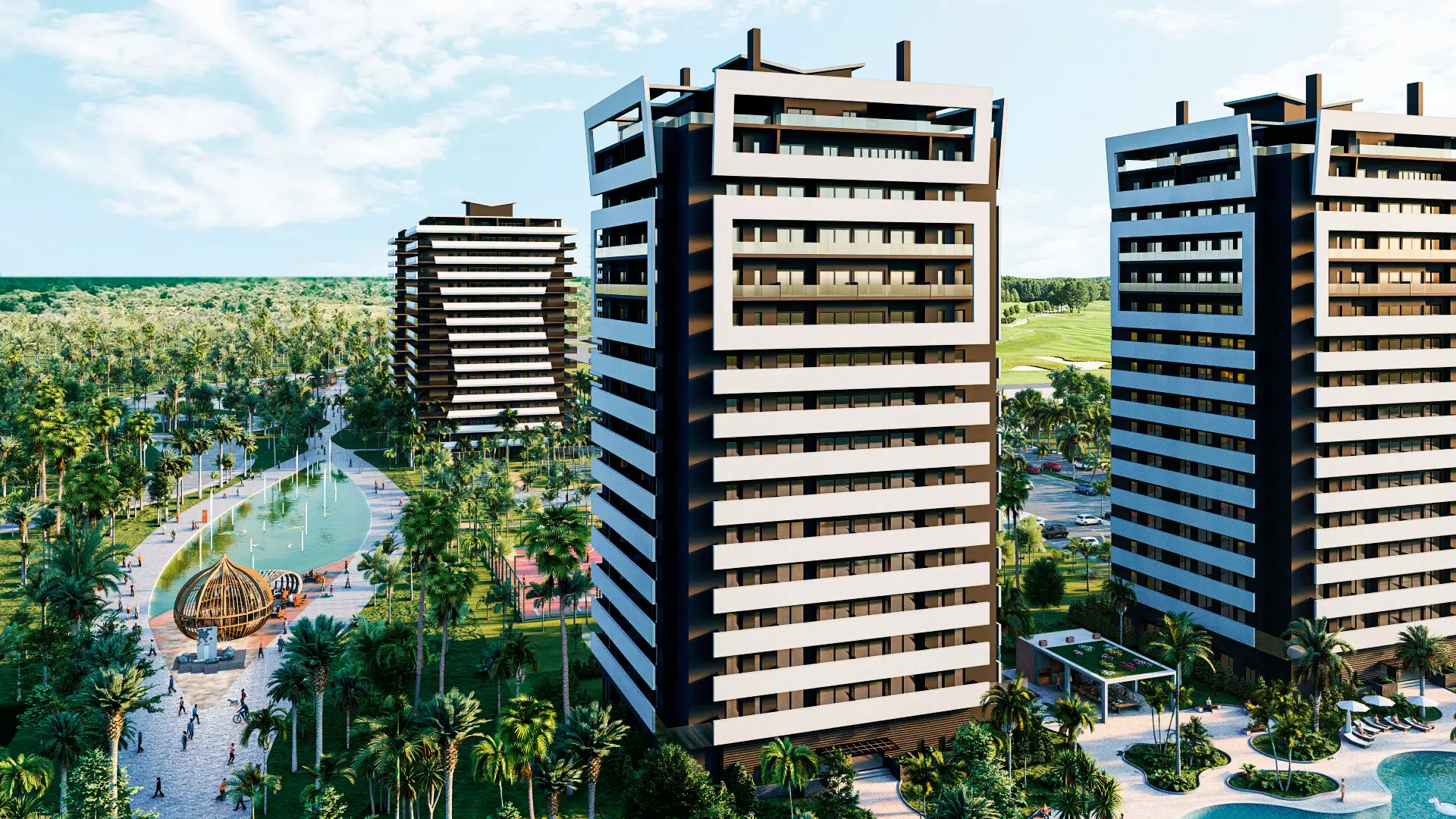
Explore the residential projects of Larimar City mentioned in this article.
Smart Investment
Join the first Smart City in the Caribbean. Discover how Larimar City redefines safety and property value in Punta Cana.
Request information